
Leaf kale
Brassica oleracea x Diplotaxis tenuifolia
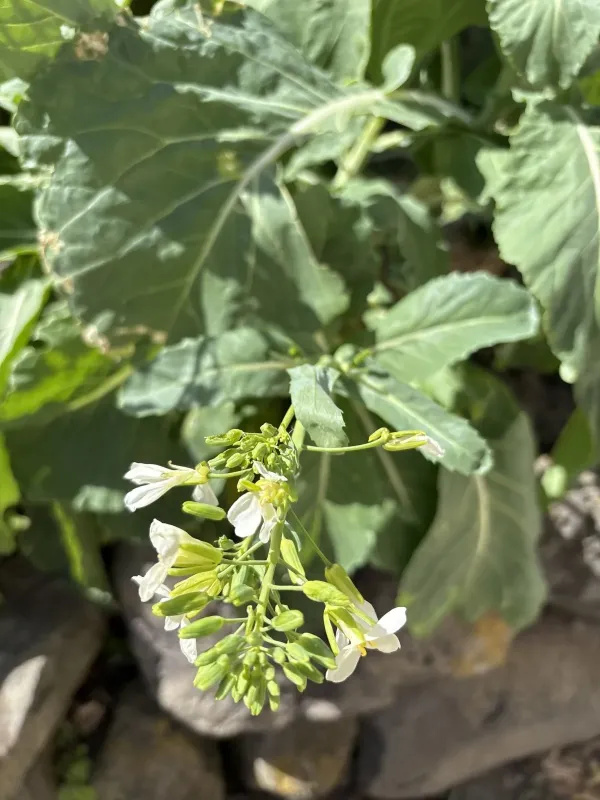
Description
Sowing dates
Leaf kale is a vigorous and fast-growing member of the Brassicaceae family, valued for its culinary versatility and nutritional profile. It is essentially a hybrid type of green that adapts well to various cultivation methods.
For outdoor sowing, seeds should be planted in early spring as soon as the soil is workable and temperatures reach 5-8 degrees Celsius. Successive planting every few weeks ensures a constant supply of greens throughout the season.
Starting seeds in modules or trays allows for easier management and better initial growth. Seedlings are typically transplanted into the garden at 4-5 weeks old, ensuring they are well-rooted.
Proper spacing is crucial for healthy development; plants should be spaced 30-40 cm apart to promote air circulation and reduce the incidence of moisture-related diseases in the foliage.
Ensuring even seed depth and good soil contact during sowing encourages uniform germination, which is vital for scheduling harvest times and managing overall crop productivity.
Growing requirements
Leaf kale prefers well-drained, fertile soil rich in organic matter. A slightly acidic to neutral soil pH, ideally between 6.0 and 7.0, provides the most favorable conditions for nutrient uptake.
Consistent moisture levels are essential for the production of tender leaves. Drought stress can lead to prematurely woody textures and a bitter flavor profile in the harvested foliage.
While nitrogen is necessary for leafy biomass, it should be applied judiciously. Over-fertilization can lead to weak, succulent growth that is more susceptible to aphids and fungal diseases.
The crop thrives in cooler temperatures, making it an excellent choice for autumn or spring harvests in many regions. It can tolerate light frost, which can even improve the sweetness of the leaves.
Sunlight requirements are moderate; although it tolerates partial shade, full sun exposure results in faster growth rates and better overall leaf coloration and density.
Yield
The yield potential of leaf kale is high, especially when employing the cut-and-come-again harvesting method. Regular removal of outer leaves encourages continuous regeneration.
Under optimal management, growers can expect 2-4 kilograms of fresh leaves per square meter throughout the growing season, depending on the frequency of harvest.
The use of high-quality hybrid cultivars can significantly increase productivity, as modern varieties are bred for rapid regrowth and resistance to premature bolting.
Soil fertility management and timely weed control are key factors in maximizing yields. Healthy roots and adequate nitrogen availability directly translate into heavier leaf production.
Environmental conditions, particularly consistent photoperiods and temperate weather, play a major role in stabilizing yields and preventing the plant from focusing on reproductive growth.
Main diseases and pests
Flea beetles are the most significant threat to young plants. They create numerous small holes in the foliage, which can quickly devastate a crop if not managed promptly upon emergence.
Fungal issues like downy mildew and clubroot are common, particularly in high-humidity areas or poorly drained soils. Crop rotation is the most effective cultural control for these pathogens.
Caterpillars, including the cabbage looper, can cause significant cosmetic and structural damage. Monitoring and the use of physical barriers or biopesticides are recommended.
- Flea beetles
- Cabbage root fly
- Downy mildew
- Clubroot
Integrated pest management, including encouraging natural predators and avoiding overhead irrigation during humid weather, helps maintain a healthy crop without excessive chemical use.
Harvesting
Harvesting begins when leaves reach a usable size, usually 45-60 days after sowing. The lower, outer leaves are removed first, leaving the central growing point intact for future growth.
Using a sharp knife or garden shears ensures a clean cut, minimizing tissue damage and reducing the risk of rot entering the remaining stalk of the plant.
Harvesting in the cool early morning hours ensures the leaves are at their peak crispness, as the plants are fully hydrated and have not yet been stressed by daily heat.
Post-harvest handling is critical; leaves should be cooled immediately to maintain quality. If stored at 2-4 degrees Celsius, kale will remain fresh and marketable for up to one week.
As the season progresses, leaves may become firmer, but they generally remain edible until hard freezes occur. This makes the crop an extremely valuable late-season vegetable.