
Brasenia schreberi
Brasenia schreberi
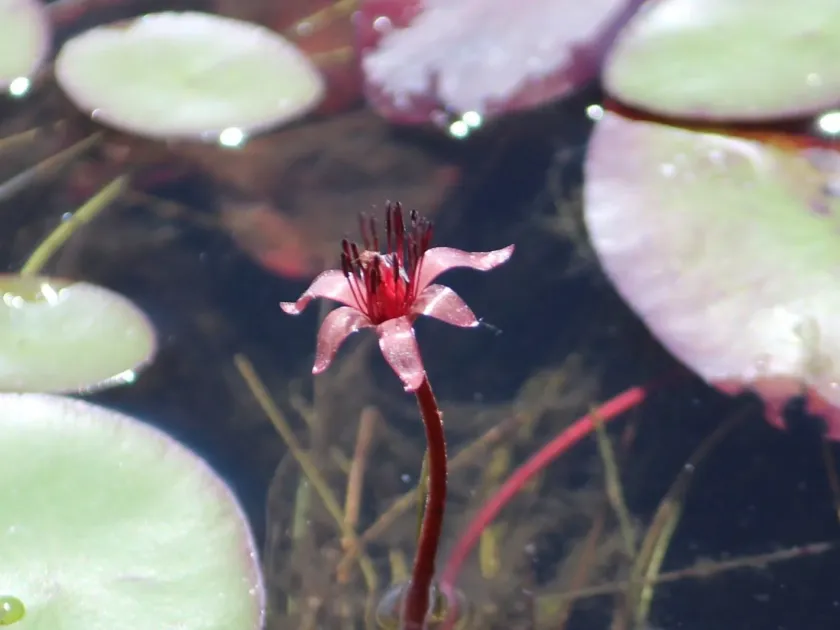
Description
Sowing dates
The propagation of Brasenia schreberi is primarily achieved through rhizome cuttings, which are planted into the fertile substrate of a shallow water body.
For those using seeds, stratification in a cold, aquatic environment for several weeks is essential to break dormancy and ensure successful germination.
The ideal planting time occurs in late spring when water temperatures consistently exceed 18 degrees Celsius, promoting rapid establishment.
When planting, ensure the rhizomes are firmly secured in the silt to prevent displacement, while providing enough surface space for future leaf development.
As a resilient perennial, established plants will regenerate annually from wintering buds, reducing the need for continuous replanting in well-managed ponds.
Growing requirements
Brasenia schreberi is a fascinating member of the Cabombaceae family, distinguished by its oval, floating leaves covered in a unique, gelatinous mucilage.
This species thrives in calm, freshwater habitats such as ponds, marshes, or slow-moving streams, requiring a depth of 0.5 to 1.5 meters.
A nutrient-rich, organic-heavy bottom sediment is crucial for optimal growth, providing the necessary minerals for the plant's metabolic processes.
Water chemistry plays a vital role; Brasenia prefers soft, slightly acidic water and is sensitive to high calcium concentrations or alkaline conditions.
Ample sunlight is required for the plant to produce its signature thick mucilage layer, making clear water and sunny locations non-negotiable for high quality.
Yield
The agricultural value of Brasenia schreberi lies in its young, tender shoots and unopened leaves, which are prized for their delicate texture.
Yields are maximized in warm climates where the growing season is extended, allowing the plant to produce multiple flushes of new growth throughout summer.
Proper water management, including periodic organic enrichment of the sediment, can significantly boost the annual production of harvestable biomass.
Quality control is centered on the consistency of the mucilaginous coating, which is highly sought after by gourmet culinary markets for its unique mouthfeel.
Successful farms monitor the plant's density carefully, as overcrowding can lead to reduced shoot quality and thinner mucilage production per plant.
Main diseases and pests
The plant is susceptible to various aquatic pests, including larvae that bore into stems and snails that graze on the tender, developing leaf surfaces.
Fungal pathogens may emerge in water bodies with poor circulation or those suffering from excessive organic pollution and high humidity levels.
Competition from aggressive invasive aquatic weeds often threatens Brasenia, as these weeds can outcompete it for light and nutrient resources.
Chemical runoff, particularly nitrogen and phosphorus from nearby farming, can lead to algae blooms that block sunlight and stifle the plant’s growth.
- Feeding damage from aquatic insects.
- Overgrowth of filamentous algae.
- Sediment disruption by bottom-feeding fish.
Harvesting
Harvesting Brasenia schreberi is a delicate task that requires manual techniques to ensure that the primary rhizomes remain undisturbed for future growth.
Collectors typically use shallow boats, carefully cutting the young, mucilage-covered shoots just below the floating foliage during the early morning hours.
Immediate handling is necessary; the harvested product must be kept in cool, moist conditions to prevent the gelatinous layer from drying out or degrading.
Post-harvest processing involves gentle washing to remove debris and a strict quality check to select only the most pristine, unblemished specimens.
Rapid transportation to the point of sale or processing is key to maintaining the plant's fresh, succulent quality, which defines its market value.