
Bearded shorthusk
Brachyelytrum erectum
Description
Growing requirements
Bearded shorthusk (Brachyelytrum erectum) is a perennial forest grass belonging to the Poaceae family. This plant is a native inhabitant of shaded, moist deciduous forests, where it has successfully adapted to low-light conditions.
Biologically, the crop prefers humus-rich, well-drained, but consistently moist forest soils with a neutral to slightly acidic pH level. The plant shows high sensitivity to direct sunlight and the drying out of the topsoil layer.
Optimal climatic conditions for its growth include a temperate climate with sufficient rainfall during the growing season. In an agronomic context, the species is viewed more as a component of natural rangelands rather than a mass-market industrial agricultural crop.
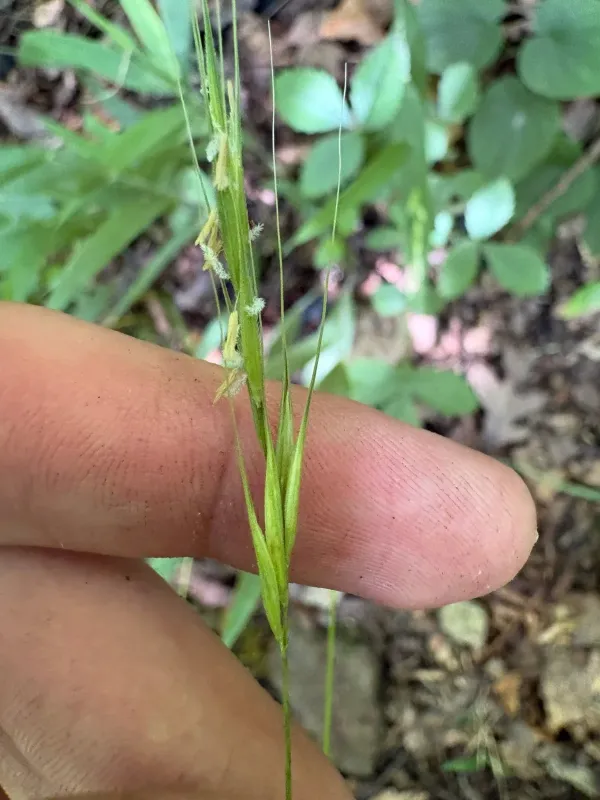
The root system of the plant consists of short creeping rhizomes, allowing it to form loose tufts. Stems reach heights of up to 1 meter and are erect, knotted, with distinctively rough leaf blades.
The economic importance of the species lies in its role as a component of forest pastures and a source of biodiversity in forest-steppe ecosystems. In specialized grassland management, it is considered a promising candidate for forming stable forage lands in shaded environments.
Main diseases and pests
The main phytopathological threats to this crop are associated with fungal diseases that develop under the high humidity conditions of forest areas. Rust and various types of powdery mildew are frequently observed.
Insects specific to forest grasses, including cereal beetles and various grain flies, can damage the generative organs of the plant during flowering and seed formation.
Excessive forest litter and waterlogging can lead to the development of root rots, which significantly reduces the overall viability of populations. Agronomic protection requires ensuring proper drainage.
Competition with aggressive weed species is a significant factor, as the bearded shorthusk develops relatively slowly. Regular monitoring of the phytocenosis state is essential.
Ecological pest control is preferred over chemical treatments, considering the forest-dwelling nature of the crop and its role in supporting local entomofauna.