
Bouvardia hybrids
Bouvardia hybrids
Description
Sowing dates
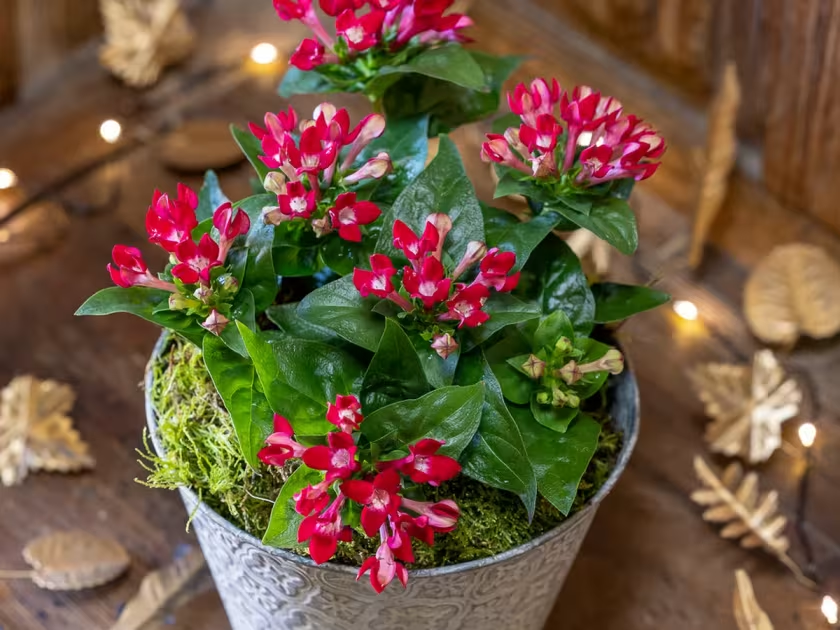
Bouvardia hybrids are decorative crops belonging to the Rubiaceae family. Bred from species native to the tropical regions of Mexico and Central America, they are now widely grown as a commercial cut flower crop.
In agronomic practice, propagation is primarily carried out through cuttings. The optimal time for obtaining high-quality planting material is during the spring when increasing daylight hours stimulate active root development.
Cuttings are planted in a loose, sterile substrate enriched with peat and perlite to ensure proper aeration. When maintaining a temperature regime of +22…+24°C, rooting occurs within 3–4 weeks, after which the young plants are ready for transplanting into the main soil.
To encourage bushiness, pinching of the shoot tips is performed to stimulate active branching. This agronomic practice increases the number of flowering stems per plant, which directly impacts the commercial yield.
In commercial greenhouses, the cultivation cycle from cutting to flowering ranges from 4 to 6 months depending on light availability and the intensity of supplemental lighting.
Growing requirements
The crop has specific temperature requirements. During the active growth phase, optimal daytime temperatures are between +20…+25°C, while nighttime temperatures should not drop below +16°C to avoid delayed inflorescence development.
Bouvardia prefers soils with a neutral to slightly acidic reaction (pH 5.5–6.5). The substrate must have high water-holding capacity while ensuring excellent drainage, as waterlogging leads to the development of root rots.
The plant is light-loving, though it requires shading during hot summer months to prevent leaf scorch. Supplemental lighting is essential during the autumn-winter period for year-round commercial production.
Humidity levels should be maintained at 70–80%. Low humidity triggers leaf curling and promotes spider mite infestations, making misting systems a crucial component of greenhouse equipment.
Regular fertilization with complex mineral fertilizers, specifically those rich in potassium and phosphorus, is necessary for developing sturdy flower stalks and vibrant petal coloration.
Yield
The yield of Bouvardia hybrids is measured by the number of marketable stems per square meter of greenhouse floor space. Under optimal agronomic conditions, production can reach 60–80 stems per square meter per growth cycle.
The quality of the cut flower is determined by stem length, inflorescence density, and the absence of mechanical leaf damage. Professional varieties produce stems 40–70 cm long with excellent transportability.
The use of modern growth regulators helps standardize plant development, making harvesting more efficient and allowing for uniform batching by height and bud opening stage.
As a perennial crop in a greenhouse, Bouvardia can remain productive for 2–3 years, after which output declines and replacement with new planting material is required.
Timely removal of spent inflorescences stimulates repeat flowering, extending the harvest period to 8–10 months per year.
Main diseases and pests
Among pests, aphids and greenhouse whiteflies pose the greatest threat to the crop. These insects not only sap the plant but also transmit viral diseases that can cause floral malformation.
Spider mites often infest the plants when air humidity is too low. Managing them requires regular monitoring, the use of acaricides, and strict climate control within the greenhouse.
Fungal infections, such as powdery mildew and grey mold (Botrytis), occur due to poor ventilation and over-irrigation. Effective control involves preventative ventilation and the use of systemic fungicides.
Root rots (Pythium, Phytophthora) develop when irrigation regimes are compromised. To prevent losses, it is vital to use only sterilized substrates and monitor the quality of irrigation water.
Adhering to phytosanitary protocols, including the removal of crop residues and the quarantine of new plants, minimizes the risk of widespread pathogen outbreaks.
Harvesting
Harvesting is conducted during the early morning hours when plants are fully turgid. Stems are cut when the first buds on the inflorescence begin to open, ensuring a longer vase life for the flower.
Immediately after cutting, the stems are placed in clean water mixed with specialized flower preservatives. This step prevents vessel occlusion and helps maintain tissue turgor.
Sorting by length and bloom quality is performed in a dedicated packing facility. The sorted stems are bundled into groups of 10–20 and wrapped in protective film or paper.
Transportation must occur in refrigerated vehicles at +5…+8°C. Maintaining the cold chain guarantees the freshness of the flowers for 10–14 days post-harvest.
Bouvardia hybrids are highly valued by florists for their aesthetic appeal and durability, making them a popular choice for high-end floral arrangements.