
Anthephora pubescens
Anthephora pubescens Nees
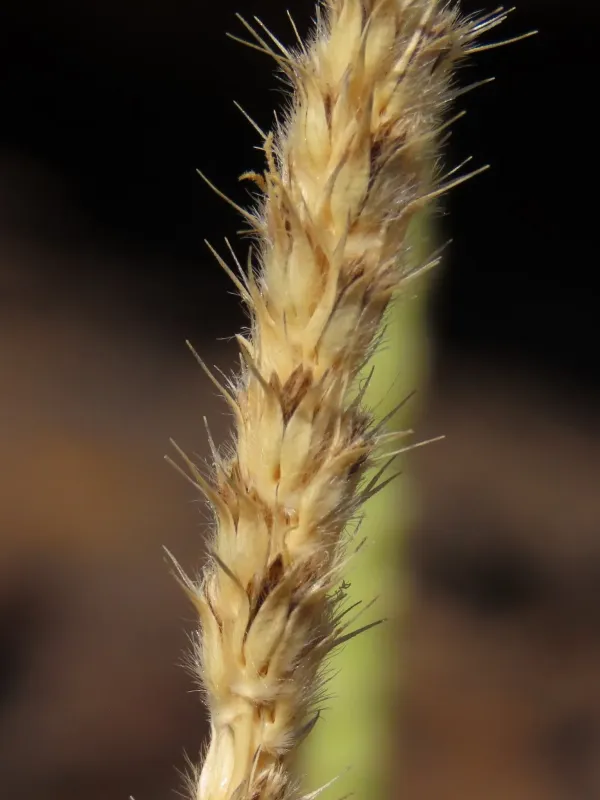
Description
Sowing dates
Anthephora pubescens is typically sown at the beginning of the rainy season when soil temperatures are consistently above 20 degrees Celsius to ensure rapid germination.
The recommended seeding rate ranges from 2 to 4 kilograms per hectare. Because the seeds are small, they should be planted at a shallow depth of 1 to 2 centimeters to maximize emergence success.
Seedbed preparation requires a clean, weed-free surface. Since the seedlings grow slowly in the initial stages, preventing weed competition is critical for the long-term success of the stand.
Both drilling and broadcasting methods are used, but they must be followed by light rolling to ensure good soil-to-seed contact, which is vital for moisture uptake.
Seedlings usually emerge within two weeks. During this time, it is important to monitor the field regularly and ensure that the plants are not overwhelmed by faster-growing vegetation.
Growing requirements
Belonging to the Poaceae family, Anthephora pubescens is a perennial grass native to semi-arid regions. It is highly valued for its exceptional ability to thrive in challenging environments.
The grass prefers well-drained sandy or loamy soils. It is particularly well-adapted to low-fertility soils where other forage crops might struggle to survive.
This crop thrives in tropical and subtropical climates with annual rainfall between 300 and 600 millimeters. It cannot tolerate waterlogged soils or standing water for long periods.
Its deep and extensive root system allows the plant to tap into deep-seated soil moisture, making it a reliable source of green forage during long periods of drought.
- Excellent heat tolerance
- Strong resilience to heavy grazing pressure
- Good nutritional value even during the dry season
- Deep roots for soil moisture extraction
Yield
The productivity of Anthephora pubescens depends on effective pasture management. With proper rotation and grazing cycles, it maintains high yields over several years.
The average dry matter yield ranges from 3 to 6 tons per hectare depending on rainfall and soil nutrient availability. It is highly efficient in converting limited resources into valuable biomass.
The plant is known for its high regrowth potential, allowing it to recover quickly after mowing or grazing. This feature is highly beneficial for intensive livestock farming systems.
The forage remains palatable and nutrient-dense even as the plant matures, which makes it an ideal reserve forage for livestock during harsh dry periods.
Proper grazing rest periods are essential to allow the plant to store carbohydrates in its base, ensuring the vigor and yield potential for subsequent seasons.
Main diseases and pests
Generally, Anthephora pubescens is a robust crop with few major diseases. However, in environments with high humidity, leaf spot diseases can occasionally occur.
Grasshoppers and other leaf-feeding insects represent the primary pest threat. Large infestations can significantly reduce green mass, requiring timely intervention.
Root rot is a potential issue if the grass is planted in poorly drained soil. Proper site selection is the best preventative measure against this problem.
Integrated pest management strategies are recommended, focusing on maintaining healthy stands and rotating grazing areas to disrupt the life cycles of potential pests.
Regular field scouting is necessary to identify early signs of pathogen or pest damage, allowing for localized control measures that protect the overall health of the pasture.
Harvesting
For hay production, the crop should be harvested during the flowering phase to optimize the balance between biomass volume and nutritional content.
Mowing should not be done too close to the ground, as leaving a portion of the stubble is critical for the plant’s rapid recovery and future productivity.
Harvesting seeds can be challenging due to natural shedding. Seeds should be collected as soon as the inflorescences transition to a light straw color.
Once harvested, seeds must be dried thoroughly and stored in a cool, dry environment to maintain high viability for the next planting season.
Effective harvest and post-harvest handling allow farmers to create high-quality winter feed reserves, ensuring nutritional stability for livestock throughout the year.