
Bonnaya ciliata
Bonnaya ciliata (Colsm.) Spreng.
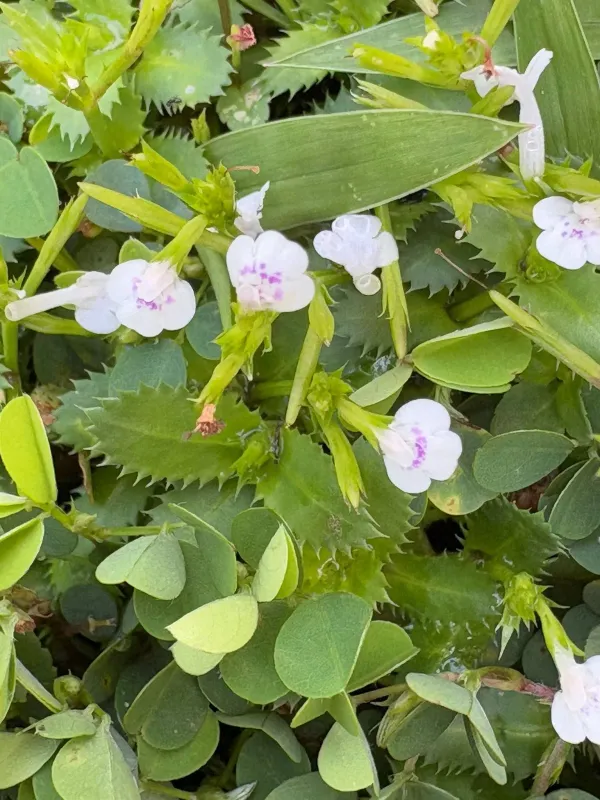
Description
Sowing dates
Bonnaya ciliata is an annual herbaceous plant belonging to the Plantaginaceae family. It is typically found in tropical and subtropical regions where moisture is abundant, and it reproduces effectively through seeds.
In a cultivation setting, seeds are sown in a damp, nutrient-rich substrate. The timing of sowing is critical and usually coincides with the start of the warm, rainy season to ensure optimal germination rates and seedling establishment.
Seeds are very small and should be sown near the surface, barely covered with a fine layer of soil or sand to allow adequate light exposure. Providing consistent moisture is essential, as the seeds will fail to germinate if allowed to dry out.
If cultivated under greenhouse conditions, high humidity and warm temperatures must be maintained. The sowing density should be monitored to prevent overcrowding, which can lead to seedling damping-off in such moisture-heavy environments.
The transition from germination to the vegetative phase requires careful irrigation management. Establishing a uniform stand is vital for subsequent crop management and uniform harvesting.
Growing requirements
The fundamental requirement for Bonnaya ciliata is an environment with high humidity and consistent water availability. It is a moisture-loving plant that naturally thrives in paddy fields, marshy areas, and along the banks of freshwater bodies.
Soil type should be loamy or silty, possessing high organic matter content. A neutral to slightly acidic pH is ideal for nutrient uptake, as the plant relies on minerals dissolved in the water environment for its rapid growth.
Temperature requirements are high, with optimal development occurring between 22 and 30 degrees Celsius. The plant is extremely sensitive to drought and cold stress, both of which can lead to physiological dormancy or plant death.
Light levels should be moderate. While the plant requires light for photosynthesis, excessive direct sunlight can cause leaf scorching in highly humid environments where transpiration regulation is difficult.
Oxygenation of the root system is also important. Even though the plant is a hydrophyte, it prefers water that is moving or well-aerated rather than stagnant, hypoxic water, which can encourage root decay.
Yield
The biomass yield of Bonnaya ciliata is primarily a function of the nitrogen availability and the stability of the hydrological regime. When grown under optimized conditions, it can produce a dense canopy of foliage within a single growing cycle.
In agricultural systems, yields can be improved through the application of dilute liquid fertilizers that provide essential macro and micronutrients directly to the water-saturated soil.
Seed production is prolific, which is a major factor in its life cycle. High seed yields ensure that the population can regenerate effectively, though this also makes it a potential weed challenge in traditional rice cultivation.
The harvesting of aerial parts at the appropriate phenological stage is crucial. Collecting biomass during peak vegetative growth before the senescence of the oldest leaves maximizes the quality of the harvested material.
Total annual yield is often dependent on the duration of the monsoon season. In controlled environments, growers can achieve multiple harvests by maintaining ideal climate conditions throughout the year.
Main diseases and pests
Fungal diseases are the most significant threat to Bonnaya ciliata. In conditions of high humidity and poor ventilation, pathogens like Botrytis or powdery mildew can quickly decimate a healthy crop.
Pests, particularly snails, slugs, and certain leaf-feeding larvae, are highly attracted to the succulent tissues of the plant. Management is difficult due to the fragility of the plant and the limited availability of registered pesticides for such species.
Competition from more aggressive, invasive aquatic weeds can easily overwhelm the plant. Because of its relatively low growth habit, it can quickly be shaded out if weeds are not managed during the early stages of growth.
Physiological stress caused by water quality issues, such as high salinity or chemical contamination, can lead to stunted growth. The plant is highly sensitive to changes in the chemical composition of its environment.
Extreme weather events, such as heavy rainstorms, can cause physical damage, breaking the brittle stems and creating wounds that serve as entry points for bacterial infections.
Harvesting
Harvesting should be done manually to ensure the integrity of the plant and to avoid crushing the soft stems. It is best performed in the cool early morning hours to keep the plant material fresh.
Post-harvest handling is critical for maintaining quality. The foliage must be washed carefully to remove soil and sediment, as any foreign matter will degrade the quality of the end-product.
Drying is the final stage of processing. It must be done in a shaded, well-ventilated area to prevent heat degradation of volatile compounds. Temperatures above 40°C should be strictly avoided to preserve its properties.
Storage of the dried product requires low-humidity conditions. The material is hygroscopic and can easily absorb moisture from the air, which would lead to microbial spoilage if not stored in airtight or moisture-proof containers.
Standardizing the harvest based on plant height and coloration helps in producing a consistent product for the market, whether it is for pharmaceutical use or as an experimental botanical crop.