
African wisteria
Bolusanthus speciosus
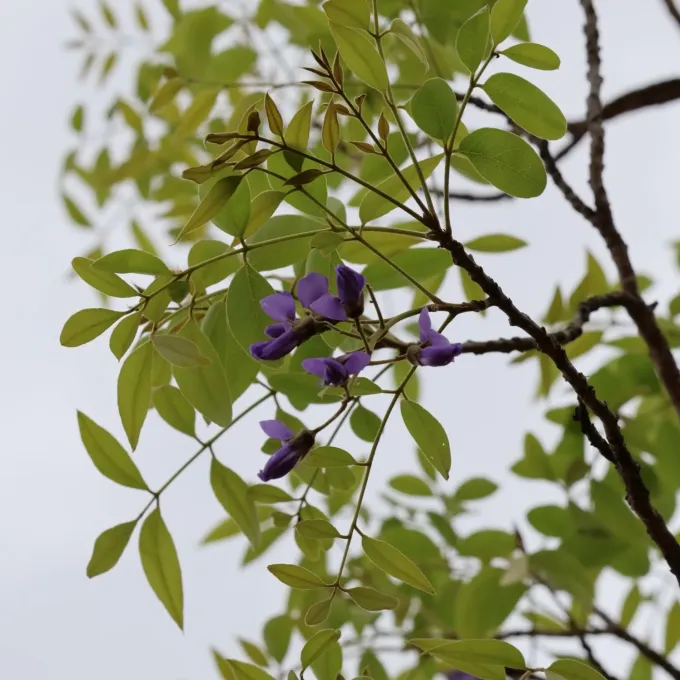
Description
Growing requirements
Bolusanthus speciosus, commonly known as the African wisteria, belongs to the Fabaceae family. This slow-growing deciduous tree is highly prized for its spectacular drooping sprays of pea-like, violet-blue flowers.
The species is native to the savanna regions of Southern Africa, thriving in environments that experience alternating wet and dry seasons. It is widely distributed across parts of South Africa, Zimbabwe, and Mozambique.
The tree requires full sun to bloom effectively. It is highly heat-tolerant but needs protection from heavy frost when young, as it is primarily adapted to subtropical and tropical climates.
Well-drained soil is a critical requirement for this species. It performs best in loam or sandy soils and does not tolerate waterlogged conditions, which can lead to rapid root degradation.
Beyond its ornamental value, the wood of the African wisteria is known for being extremely durable and heavy. It is historically utilized for high-quality fence posts, tool handles, and fine woodworking projects due to its termite resistance.
Main diseases and pests
Young trees are frequently attacked by leaf-eating caterpillars and various beetle species that can cause defoliation during the growing season.
Fungal leaf spot diseases may appear during periods of prolonged high humidity, requiring careful management of airflow and canopy density.
Root rot is the most common threat caused by poor drainage or excessive irrigation, which damages the health of the root system significantly.
Stem borers can infest the trunks of older trees, especially those under stress, making regular monitoring of bark integrity essential for long-term health.
In agroforestry settings, browsing animals can cause significant damage to young shoots, necessitating physical barriers until the tree reaches a sufficient height.