
Erect spiderling
Boerhavia erecta L.
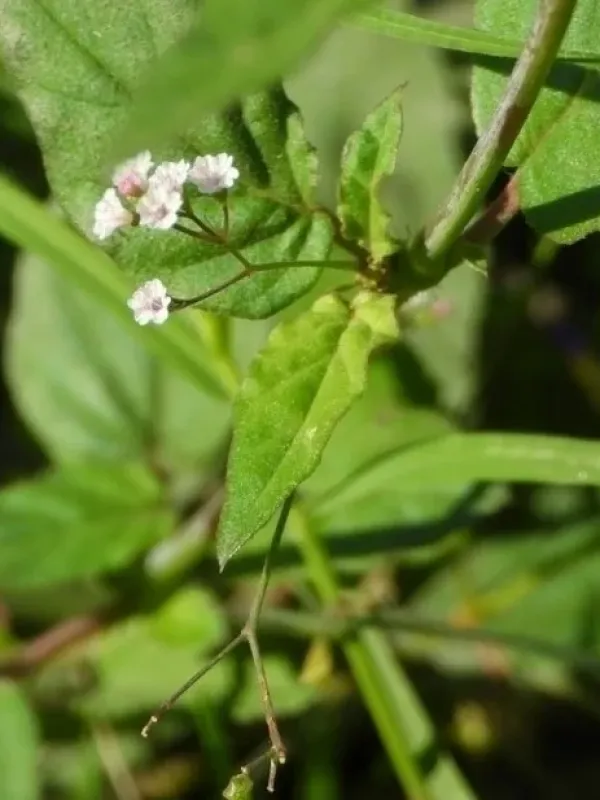
Description
Sowing dates
The planting of Boerhavia erecta is ideally performed in spring when the soil temperature consistently reaches above 20 degrees Celsius, facilitating rapid seed germination.
Seeds should be sown at a shallow depth of 1 to 2 centimeters, ensuring they are adequately covered while remaining close enough to the soil surface to capture light.
In field conditions, row planting is preferred to provide ample space for vegetative development and to simplify weed management during the early growth stages.
Adequate soil moisture during the initial sowing phase is critical, as it ensures uniform emergence of seedlings across the entire cultivated area.
Using high-quality, treated seeds significantly improves the success rate of the stand and ensures that the resulting crop is uniform in both growth rate and vigor.
Growing requirements
Boerhavia erecta, a member of the Nyctaginaceae family, thrives in well-drained, sandy, or loamy soils with a pH ranging from neutral to slightly alkaline.
This crop is highly heliophilous, requiring full sun exposure to maximize photosynthesis and the accumulation of secondary metabolites within its root system.
The plant demonstrates excellent drought tolerance, allowing it to survive in arid environments where water availability is often inconsistent or limited.
Optimal growth temperatures for this species fall between 25 and 35 degrees Celsius, reflecting its natural adaptation to tropical and subtropical climates.
Proper soil management, including regular loosening and aeration, is essential to prevent soil compaction and promote the deep penetration of roots into the substrate.
Yield
The yield of Boerhavia erecta is primarily determined by the quality and quantity of its roots, which are highly valued for their medicinal properties in traditional medicine.
Harvesting is typically conducted after the plant enters its full maturation phase, as this is when the concentration of bioactive compounds is at its highest.
Modern agronomic practices, including controlled irrigation and balanced fertilization, can significantly increase the total yield of raw medicinal material.
After harvesting, the roots must be carefully cleaned, washed, and dried under controlled temperature conditions to ensure the long-term stability of the active components.
Consistent market demand for natural remedies encourages farmers to optimize their production methods to achieve higher outputs of standardized, high-purity roots.
Main diseases and pests
Fungal diseases, particularly those affecting the root system, represent the most significant threat, often induced by waterlogging or poor soil drainage.
Pests such as aphids and various species of nematodes can cause localized damage, weakening the plants and reducing overall biomass productivity.
Integrated Pest Management (IPM) strategies are recommended, focusing on early detection and the use of natural control agents to maintain ecological balance.
Chemical intervention should be strictly limited, given that the plant is primarily harvested for health and therapeutic purposes, requiring stringent safety standards.
- Implementing strategic crop rotation to minimize pathogen buildup.
- Providing adequate drainage to avoid root rot issues.
- Ensuring proper spacing to facilitate air circulation.