
Blackfoot daisy
Melampodium leucanthum Torr. & A. Gray
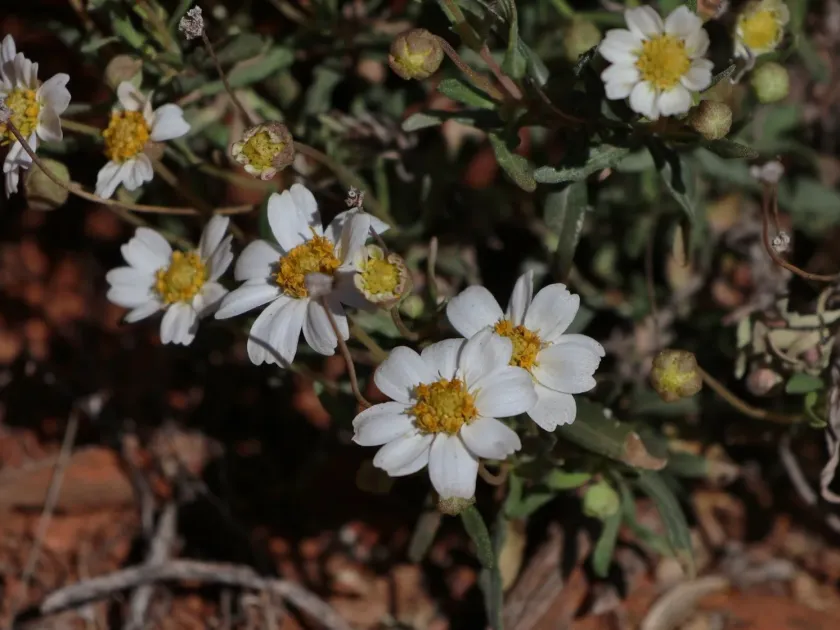
Description
Sowing dates
Sowing of Melampodium leucanthum is typically performed in early spring after the soil has warmed up, ensuring optimal conditions for germination and early root development.
When starting seeds indoors, use a well-draining seed starting mix and keep the containers in a bright location, as light is beneficial for the germination process of this species.
Transplanting seedlings to the outdoor garden should only occur after all risk of frost has completely passed, given the plant's sensitivity to cold temperatures.
The seeds are small and should be sown shallowly; pressing them gently into the soil surface rather than burying them deep ensures they receive adequate oxygen.
Proper spacing is crucial for airflow; planting the specimens approximately 12 to 16 inches apart prevents overcrowding and facilitates a healthy, mounding growth habit.
Growing requirements
The Blackfoot daisy is a hardy member of the Asteraceae family, prized for its ability to thrive in arid climates and xeriscaping applications with minimal irrigation.
It requires full sun exposure to maintain its signature low, mounded shape and to promote the production of an abundance of white, fragrant flowers throughout the summer.
Soil requirements focus on excellent drainage; it naturally occurs in rocky or sandy substrates, making it an ideal candidate for rock gardens and slopes.
In terms of moisture, the plant is remarkably drought-tolerant once established, requiring only occasional deep watering during extended periods of heat and lack of rainfall.
This species is highly adaptable to poor, alkaline soils, reducing the need for intensive fertilization and making it a low-maintenance choice for professional landscaping.
Main diseases and pests
While generally robust, the Blackfoot daisy can be susceptible to root rot if it is subjected to overly moist conditions, particularly in soil that retains too much water.
Fungal infections, such as powdery mildew, may occur during periods of high humidity if the plants are packed too tightly and do not receive adequate air circulation.
Pests like aphids and spider mites can occasionally infest the foliage, especially when the plant is stressed by improper environmental conditions or nutrient deficiencies.
Integrated pest management is recommended, starting with visual inspections of the undersides of leaves and manual removal or natural treatments for localized infestations.
Maintaining a clean growing area by clearing away debris and dead vegetation helps to minimize the presence of pathogen reservoirs that could compromise the crop.