
Macropidia fuliginosa
Macropidia fuliginosa (Hook.) Druce
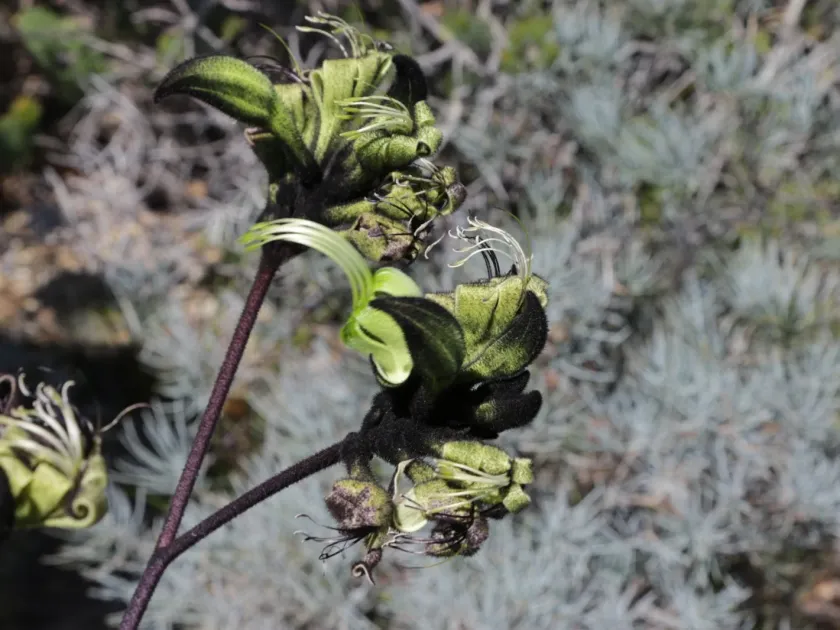
Description
Sowing dates
Propagating Macropidia fuliginosa from seeds is a delicate process, as the species has evolved to germinate specifically after bushfire cues in its native habitat.
In commercial cultivation, smoke treatment or the application of smoke-water is essential to break seed dormancy and ensure reliable germination rates.
Seeds are typically sown in early spring into a well-draining, nutrient-poor substrate that mimics the sandy, acidic soils of Western Australia.
Precision in irrigation during the germination phase is critical, as excessive moisture leads to seed rot rather than seedling development.
Once established, seedlings must be handled with extreme care, as their root systems are fragile and highly susceptible to transplant shock.
Growing requirements
A member of the Haemodoraceae family, this species requires specific environmental conditions that mirror its arid Australian ecosystem.
Full sun exposure is vital for the plant to thrive; inadequate light levels result in weak flower stalks and poor overall development.
The ideal soil is a sandy, acidic medium with very low phosphorus levels, as the plant has evolved to survive in nutrient-deficient environments.
High phosphorus concentrations are toxic to Macropidia and will rapidly cause the plant to decline, making standard fertilizer programs unsuitable.
Climatic conditions should favor a Mediterranean pattern with dry, hot summers and cool winters, ensuring excellent ventilation to prevent fungal outbreaks.
Yield
Macropidia fuliginosa is primarily grown as a specialty high-value cut flower, prized globally for its unique black-and-green velvety appearance.
Annual yields depend heavily on maintaining strict soil health and environmental control, as the plant is slow-growing and sensitive to stress.
Production is focused on selecting high-quality stems that exhibit uniform coloring and robust structural integrity for the elite floral market.
While output volumes are relatively low compared to mainstream ornamental crops, the premium price point ensures significant economic value.
Sustainable harvesting and precise post-harvest handling are necessary to maximize the shelf life and marketability of the cut stems.
Main diseases and pests
The most significant threat to Macropidia production is Phytophthora root rot, which is often fatal and can decimate entire planting beds.
Common greenhouse pests, including aphids and spider mites, can cause damage to the foliage and flower stalks if not managed through rigorous monitoring.
Chlorosis is a frequent issue, often signaling an imbalance in micronutrients or incorrect pH levels within the substrate medium.
Bacterial leaf spot can develop under conditions of high humidity, necessitating the use of preventive measures such as good spacing and airflow.
Sanitation is the cornerstone of disease management; all tools must be sterilized regularly to prevent the spread of soil-borne and foliar pathogens.
Harvesting
Harvesting is performed by hand when the flower spikes have reached the desired level of color development and structural maturity.
Clean, sanitized blades must be used to ensure that the cut site does not become an entry point for opportunistic pathogens.
Cut stems should be placed in clean, fresh water immediately, often treated with specialized floral preservatives to maintain their turgidity.
Careful packing is required to protect the sensitive, fuzzy texture of the flower spikes, as physical abrasions reduce commercial grade.
Storage and transportation occur in cooled environments to minimize water loss and preserve the aesthetic quality of the blooms until they reach the final consumer.