
Bienertia sinuspersici
Bienertia sinuspersici
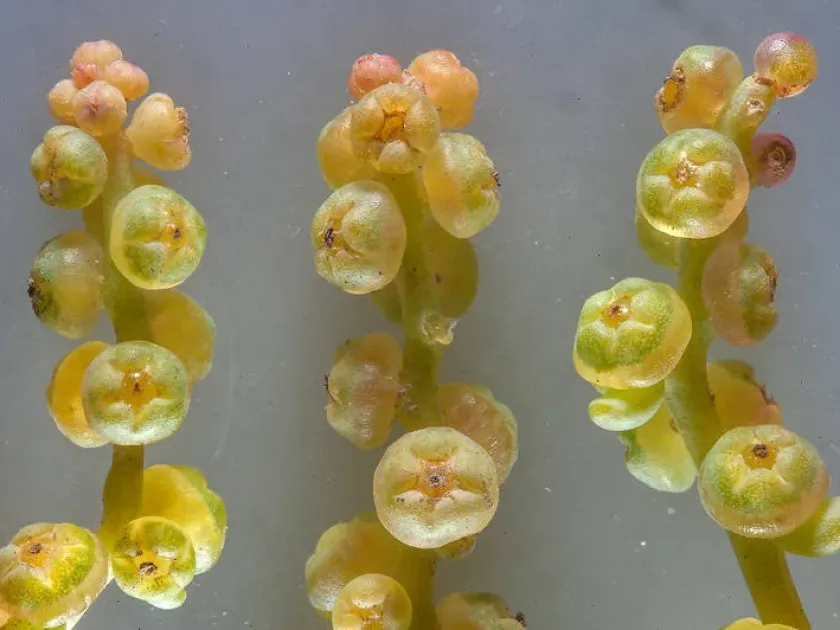
Description
Growing requirements
Bienertia sinuspersici is an annual herbaceous plant belonging to the Amaranthaceae family. It is globally recognized in plant physiology for its unique single-cell C4 photosynthesis mechanism, which allows it to thrive in high-temperature and high-light environments.
The plant is native to the coastal regions of the Persian Gulf, where it naturally inhabits salt marshes and intertidal zones. Its evolution in these extreme saline environments makes it a prime candidate for agricultural projects in areas affected by soil salinity.
For successful cultivation, Bienertia requires intense solar radiation and high ambient temperatures. It is an obligate halophyte, meaning its growth is often enhanced by the presence of sodium chloride in the soil, which helps it maintain turgor and metabolic activity.
The ideal soil conditions are sandy or loamy saline soils with efficient drainage to prevent waterlogging. Proper soil management involves ensuring that the saline balance is maintained, as the plant relies on these minerals for its specialized intracellular processes.
The primary agricultural interest in this species lies in its potential for biomass production in arid lands and as a tool for phytoremediation. It demonstrates significant potential for converting saline-degraded deserts into productive areas for industrial feedstock.
Main diseases and pests
Due to its specialized chemical composition and high salt content in its tissues, Bienertia sinuspersici is naturally resistant to many common agricultural pests. It does not provide the nutritional profile sought by typical generalist herbivores.
The most significant threats to the crop are related to environmental mismanagement, specifically the flooding of the soil with fresh water. Excess fresh water significantly disrupts its salt-dependent metabolism, leading to physiological weakness and susceptibility to root rot.
Fungal pathogens and soil-borne diseases may emerge if the drainage is insufficient. Keeping the soil in an aerobic, saline state is the best prophylactic measure to maintain the health of the crop in a commercial setting.
Weed competition is generally low in Bienertia fields, as most traditional weeds are unable to withstand the high soil salinity levels that are beneficial for the development of this specific halophyte species.
To prevent disease, farmers should monitor soil salinity levels continuously. A decrease in salinity levels not only reduces the plant's growth rate but also makes it susceptible to opportunistic pathogens that would otherwise be suppressed in a saline environment.