
Bienertia cycloptera
Bienertia cycloptera
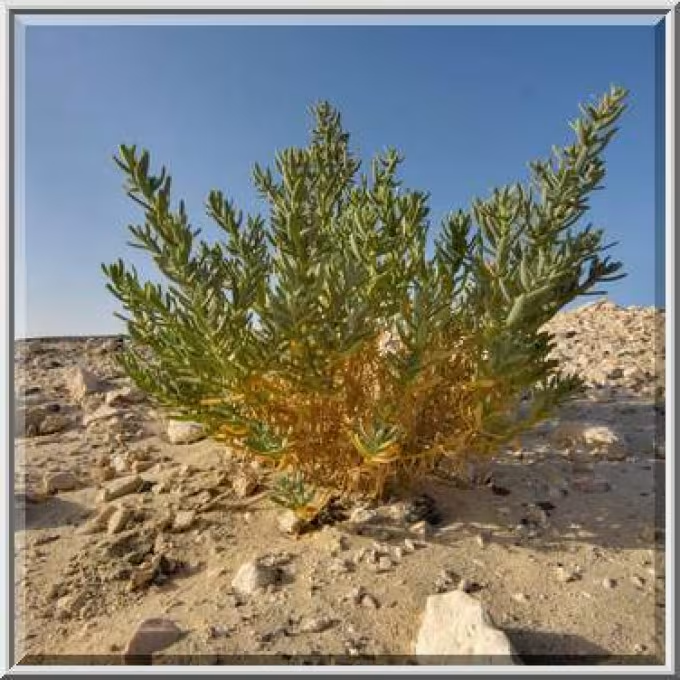
Description
Growing requirements
Bienertia cycloptera is a remarkable annual herbaceous plant belonging to the Amaranthaceae family, subfamily Chenopodioideae. It is classified as an extreme halophyte, natively distributed in arid and semi-arid regions characterized by high soil salinity levels.
The plant is globally recognized by botanists for its rare single-cell C4 photosynthesis mechanism. Unlike traditional C4 plants that separate CO2 fixation into different leaf tissues, Bienertia performs this process within a single chlorenchyma cell, making it a unique biological subject for agricultural research.
Botanically, the plant features succulent, fleshy leaves that store water and allow it to withstand prolonged dry periods. This structural adaptation helps maintain turgor pressure even when the root system is exposed to saline solutions that would dehydrate other crops.
In terms of environmental requirements, Bienertia cycloptera thrives in sandy, saline, and alkaline soils. It requires high solar irradiance and significant heat to maximize its photosynthetic capacity and overall biomass production throughout the growing season.
While not yet widely domesticated as a primary food crop, it holds significant potential for saline agriculture. Its ability to sequester carbon and produce biomass on otherwise unusable, degraded saline land makes it a subject of interest for sustainable desert farming strategies.