
Bewsia biflora
Bewsia biflora
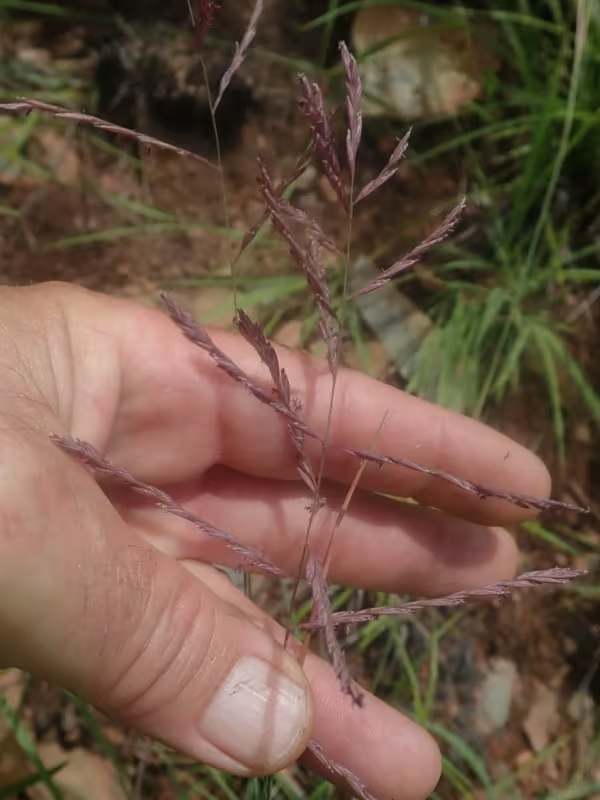
Description
Growing requirements
Bewsia biflora is a perennial grass species belonging to the Poaceae family. Native to the southern regions of Africa, this plant is well-adapted to specific harsh environmental conditions.
The species primarily thrives in well-drained sandy or stony soils. It shows a remarkable ability to colonize areas with poor soil fertility where competitive crops might fail.
In terms of climatic adaptation, Bewsia biflora is a drought-tolerant plant. It has evolved to survive in semi-arid environments characterized by irregular rainfall and high evapotranspiration rates.
Botanically, it is identified by its distinct two-flowered spikelets. Its growth habit is typically tufted, allowing the plant to concentrate resources in its root system during periods of environmental stress.
Effective establishment of this grass requires minimal intervention once it is acclimated, as its biology is geared towards long-term persistence in stable grassland ecosystems.
Harvesting
Agricultural use of Bewsia biflora centers on its role as a forage crop in extensive livestock grazing systems. It provides essential biomass during seasons when more sensitive forage species go dormant.
Grazing management is crucial for the sustainable utilization of this grass. Proper rotation schedules ensure that the plants recover their energy reserves and maintain long-term productivity.
Harvesting for hay is occasionally practiced in regions where biomass accumulation is sufficient. The nutritional quality is highest before the onset of the reproductive stage.
Beyond its forage value, Bewsia biflora is utilized for land restoration projects. Its extensive root system helps stabilize sandy soils, preventing wind and water erosion in vulnerable landscapes.
Seed collection for propagation purposes is performed when spikelets reach full maturity. This ensures high germination rates and the continued presence of the species in restorative plantings.