
Mediterranean lineseed
Bellardia trixago
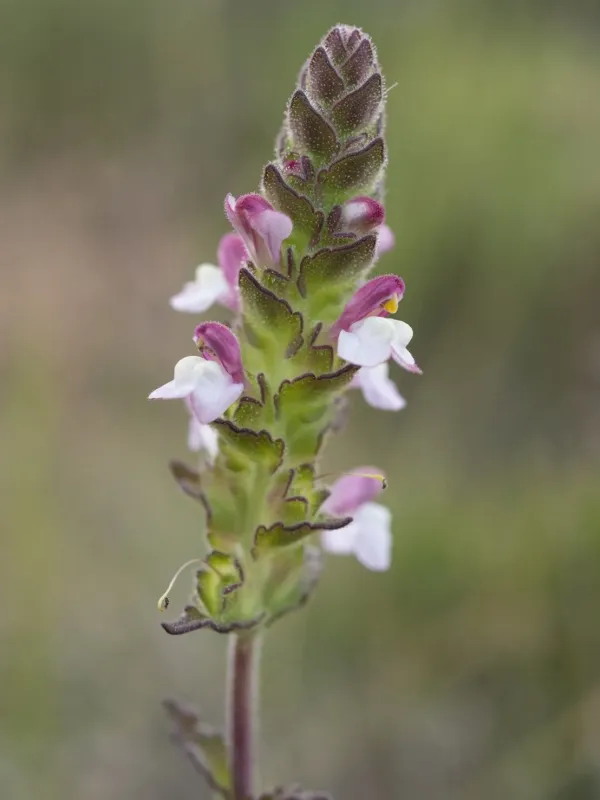
Description
Growing requirements
Mediterranean lineseed (Bellardia trixago) is an annual herbaceous plant belonging to the Orobanchaceae family. It is widely recognized for its unique hemiparasitic nature, which allows it to thrive in diverse ecological niches across the Mediterranean region and beyond.
The plant originates from Southern Europe, North Africa, and Western Asia. It typically occupies dry grasslands, sandy fields, and abandoned agricultural lands, where it finds suitable host species to attach its specialized root structures known as haustoria.
Botanically, Bellardia trixago features a tall, erect stem with dense, spike-like inflorescences. The flowers are typically white or yellowish, adapted for insect pollination, and possess the capability to derive water and essential nutrients from the roots of surrounding vegetation.
Environmental requirements for this species are centered on well-drained, nutrient-poor soils. It is highly drought-tolerant, utilizing its parasitic connection to maintain hydration levels during the harsh, dry summers characteristic of its native habitat.
The plant prefers open, sunny locations. It does not compete well in environments with dense shading or heavy clay soils that retain excessive moisture, as these conditions inhibit the formation of efficient haustorial connections with hosts.
Main diseases and pests
Key threats to Bellardia trixago include mechanical soil cultivation and habitat disturbance. Since it relies on specific host plants, the elimination of those hosts through heavy land use or herbicide application directly results in the decline of the parasite's population.
Fungal pathogens represent a threat, particularly in humid or overcrowded conditions. Diseases such as powdery mildew can weaken the stems and reduce seed production, significantly limiting the plant's ability to regenerate in the following season.
In terms of pests, the plant is relatively resilient due to chemical defense mechanisms. However, generalist herbivores and sucking insects like aphids can sometimes cause localized damage, particularly when the plant is already stressed by environmental factors.
Management of this species in an agricultural setting involves deep plowing and crop rotation. By changing the composition of vegetation, farmers can disrupt the haustorial attachment process, effectively reducing the presence of the weed in commercial fields.
Chemical control is an option using selective herbicides, though it is most effective when applied early in the growth stage. Ensuring that seed-bearing stems are removed before maturation is vital to preventing the replenishment of the soil seed bank.