
Bauhinia richardiana
Bauhinia richardiana
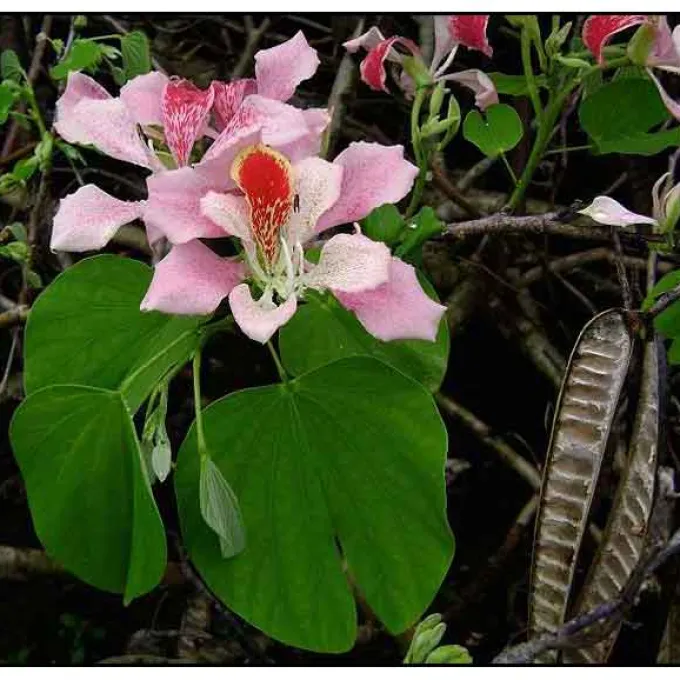
Description
Growing requirements
Bauhinia richardiana belongs to the legume family (Fabaceae). It is an evergreen woody plant that can grow to a significant size in natural conditions, forming a dense and spreading canopy.
The culture is native to tropical regions, primarily South America (Brazil). The plant prefers well-lit areas with high air humidity and consistently warm temperatures throughout the year.
For optimal growth, Bauhinia richardiana requires fertile, loose soil with a neutral or slightly acidic pH. Providing good drainage is a crucial condition, as the crop is extremely sensitive to waterlogging in the root zone.
The plant possesses characteristic leaves that visually resemble a hoof print or an open book. Flowering is accompanied by the appearance of large, spectacular inflorescences, making the species valuable for landscape gardening.
In industrial and ornamental horticulture, the crop is used to create hedges, shady alleys, and as a focal point in landscapes. The wood of the bauhinia can also be used in local craft manufacturing.
Main diseases and pests
The main threats to Bauhinia richardiana are root rots, which occur due to improper watering and soil saturation. To prevent this, it is necessary to follow a strict soil aeration schedule.
Among pests, the most dangerous are sap-sucking insects, such as aphids and spider mites, which reproduce actively in hot and dry microclimates. Regular foliage inspection helps to contain outbreaks in a timely manner.
Leaf-eating caterpillars can cause significant damage to young vegetative mass during the active growth phase. Both biological control methods and localized treatment with systemic insecticides are effective.
Chlorosis is often a consequence of micronutrient deficiency in the soil, especially when grown in containers or on poor substrates. Adjusting fertilizer composition allows for the rapid restoration of the plant's decorative quality.
Fungal leaf diseases, such as powdery mildew, require humidity control and sufficient crown ventilation. Timely sanitary pruning helps to reduce the overall disease pressure.