
Barongia lophandra
Barongia lophandra
Description
Growing requirements
Barongia lophandra is a rare shrub species belonging to the Myrtaceae family. It is strictly endemic to the tropical rainforests of northeastern Queensland, Australia. This species is typically found in high-altitude environments, where it adapts to specific microclimatic conditions defined by constant moisture and moderate temperatures.
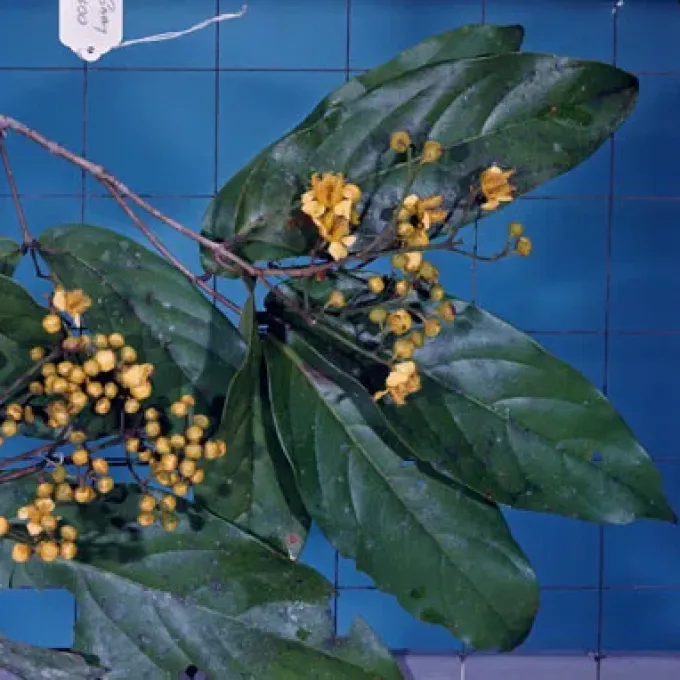
The botanical structure of the plant is characterized by leathery leaves and distinctive flowers that exhibit unique stamen morphology. This specialized structure is the defining feature of the genus Barongia. As a slow-growing evergreen, it maintains a compact architecture, making it an attractive specimen for specialized botanical collections and conservatories.
In terms of cultivation, the soil must be highly permeable and acidic, mimicking the forest floor litter of its native habitat. Efficient drainage is paramount, as the root system is susceptible to hypoxia and secondary rot if water remains stagnant. A potting mix consisting of pine bark, perlite, and peat is generally recommended for domestic or greenhouse cultivation.
Environmental requirements are quite strict: the plant thrives in conditions with high atmospheric humidity and diffuse, filtered sunlight. It cannot tolerate direct exposure to the afternoon sun, which often leads to leaf necrosis. Furthermore, a stable temperature range, avoiding extreme heat or any risk of frost, is essential for its survival and long-term health.
Regarding its хозяйственное use, Barongia lophandra is currently categorized as an ornamental plant for greenhouse displays and private exotics collections. There is significant interest in its conservation and propagation, as habitat loss in its native Queensland remains a challenge. Research into its physiological responses to fertilizers is also ongoing to optimize growth rates in captivity.