
Baloskion tetraphyllum
Baloskion tetraphyllum (Labill.) B. G. Briggs & L. A. S. Johnson
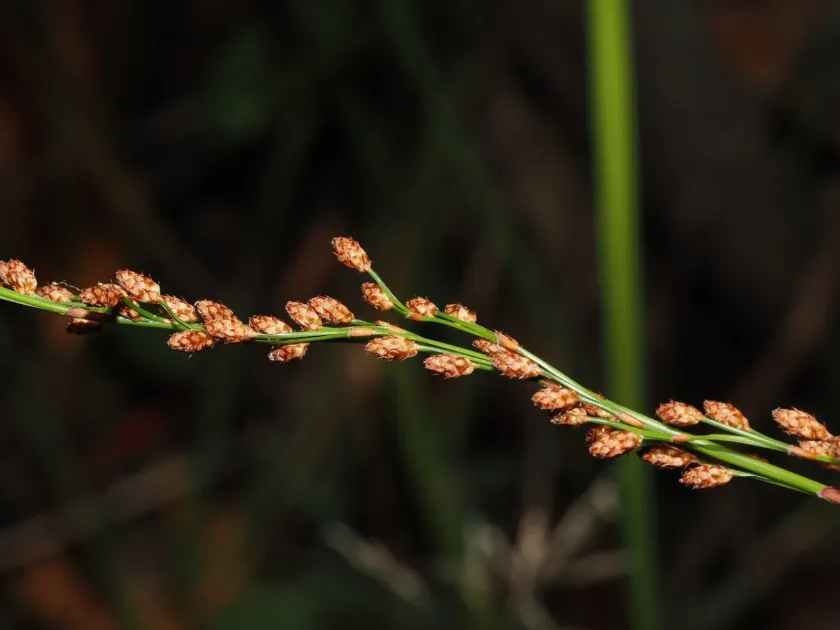
Description
Growing requirements
Baloskion tetraphyllum is a perennial grass-like plant belonging to the Restionaceae family. It is native to eastern Australia, widely distributed in areas with high precipitation such as wetlands, heathlands, and coastal riverbanks.
The plant is characterized by its stiff, vertical, reed-like stems that create a distinctive architectural shape. The leaves are reduced to protective sheaths, which is an evolutionary adaptation to the wet, often nutrient-poor soils of its natural habitat.
To cultivate this plant successfully, one must replicate its natural moisture regime. It requires consistently damp, well-draining, and acidic soil. It is intolerant of long periods of drought, which makes irrigation management a critical part of its cultivation.
The agronomic approach for this species involves maintaining an acidic pH level in the growing medium, typically between 5.0 and 6.0. Regular applications of low-phosphorus fertilizers are recommended to ensure healthy development without damaging sensitive roots.
In terms of хозяйственного (utilitarian) use, Baloskion tetraphyllum is highly valued for ornamental purposes. It is an excellent choice for wetland restoration projects, water feature landscaping, and modern minimalist gardens where a unique structural element is required.
Main diseases and pests
The main threats to this culture are root rot pathogens, which thrive in waterlogged, stagnant conditions. Ensuring the substrate does not become anaerobic is the primary defense strategy for growers to maintain a healthy plantation.
While the plant is generally pest-resistant, spider mites and aphids can become an issue in controlled environments with poor airflow. Monitoring for early signs of infestation and ensuring adequate space between individual plants will effectively reduce the pressure from these pests.