
Bastard cabbage
Rapistrum rugosum (L.) All.
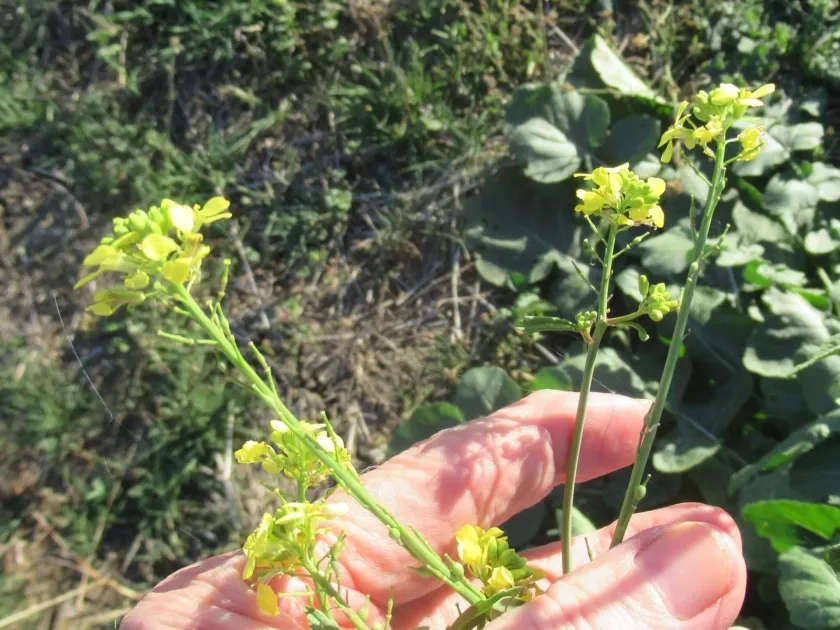
Description
Growing requirements
Bastard cabbage (Rapistrum rugosum) is a member of the Brassicaceae family. It is widely recognized in agriculture as a persistent weed that thrives in disturbed soils and competes aggressively with major commercial crops for nutrients and sunlight.
The plant performs best in sunny, well-drained locations and shows remarkable tolerance to poor soil quality and drought. Its adaptability allows it to establish colonies rapidly in agricultural landscapes, roadsides, and abandoned fields.
Botanically, it features a basal rosette of leaves that transitions into an erect, branching stem. The distinctive seed pods, which break into two segments, allow for effective seed dispersal over long distances, often contributing to its invasive nature.
In terms of agricultural management, intensive tillage and the application of selective herbicides are required to keep the populations under control. Preventive measures include ensuring seed purity in sowing materials and keeping field edges clean.
While often treated as an unwanted plant, understanding its biology is crucial for farmers aiming to prevent its spread into high-value fields like canola or wheat, where it can be particularly difficult to eradicate once established.
Main diseases and pests
Key insect pests that target Bastard cabbage include flea beetles, which can cause severe defoliation during the seedling stage, significantly impacting the plant's survival and growth dynamics in early spring.
The plant is also susceptible to diamondback moth larvae, which feed on the foliage and flowering parts. These pests, if left unmanaged, can reduce the overall fitness of the plant population within an agricultural setting.
Fungal pathogens such as white rust and downy mildew can affect the plant under humid conditions. These infections often manifest as leaf spots or white patches, which may reduce the photosynthetic efficiency of the weed.
Integrated pest management strategies involve monitoring for these threats, as the plant can serve as a green bridge for pests and diseases, facilitating their spread to neighboring crop plants during the season.
Controlling these threats is essential not only to limit the spread of the weed itself but also to protect the wider agroecosystem from the potential buildup of pests that thrive on Brassicaceae family hosts.