
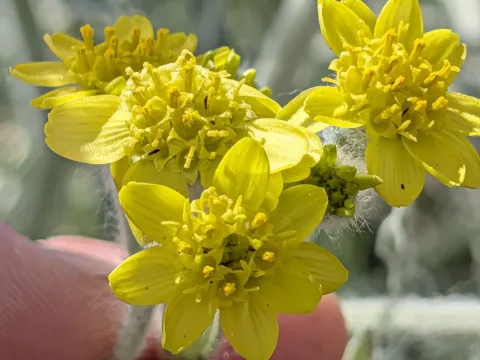
Baileya
Baileya Harv. & A. Gray ex Torr.
Seeds of Baileya should be sown directly into the ground once the soil has completely warmed up in late spring. This plant thrives in warm conditions and will not germinate effectively in cold or damp soil environments.
What the section contains

Baileya
Starting seeds indoors is a viable option for gardeners in cooler regions. Using plug trays, seeds can be sown about 6–8 weeks before the last frost date, ensuring they receive plenty of bright light to prevent them from becoming leggy.
The germination medium must be extremely well-draining, consisting of a mix of sand, peat-free compost, and perlite. Because the seeds are tiny, they should be surface-sown and only lightly pressed into the soil to ensure contact without burying them too deeply.
Space the seedlings at least 12–16 inches apart when transplanting into the garden. Proper spacing is critical to ensure that each plant receives maximum sunlight and maintains optimal airflow, which is key to preventing disease.
Select a planting location that receives full, direct sun for the majority of the day. Baileya requires intense solar exposure to produce its characteristic golden-yellow blossoms and to maintain its compact, healthy form.
Baileya is a genus within the Asteraceae family, native to the arid landscapes of the southwestern United States and Mexico. It is specifically adapted to survive in harsh, high-heat, and low-moisture environments.
The soil must be sandy or gravelly with excellent drainage. This plant is highly susceptible to root rot, so it should never be planted in heavy clay soils or areas where water tends to pool after rainfall.
Fertilization should be kept to a minimum. Baileya is naturally accustomed to nutrient-poor soils; adding excessive nitrogen will result in lush foliage but significantly fewer flowers and a weaker plant structure.
Watering requirements are low. Once established, the plant is remarkably drought-tolerant. During the hottest months, water only when the top few inches of soil have completely dried out, and always water at the base to avoid wetting the foliage.
The plant is distinguished by its silvery, pubescent leaves and stems, which help reflect sunlight and reduce transpiration. This adaptation allows the plant to thrive even during extreme summer temperatures.
Root rot caused by Phytophthora or Pythium species is the most common threat to Baileya. Maintaining a strict irrigation schedule and ensuring the soil is perfectly draining is the best defensive strategy against these pathogens.
Powdery mildew can manifest as a white, dusty layer on the foliage during periods of stagnant air and high humidity. Improving site ventilation and applying an appropriate fungicide can resolve the infection effectively.
Aphids are frequent visitors to the developing flower buds, where they feed on nutrient-rich sap. Early detection is important, and a gentle spray of horticultural soap can often dislodge the pests without damaging the plant.
Spider mites may become problematic during extended hot and dry spells. These pests thrive in dry environments, so maintaining proper plant health is key to preventing their population from exploding and damaging the leaves.
Snails and slugs are common pests for young seedlings, especially in the early spring. Protecting young plants with physical barriers or organic bait is recommended to ensure they reach maturity without significant foliage loss.