
Desert marigold
Baileya multiradiata Harv. & A. Gray ex Torr.
Description
Sowing dates
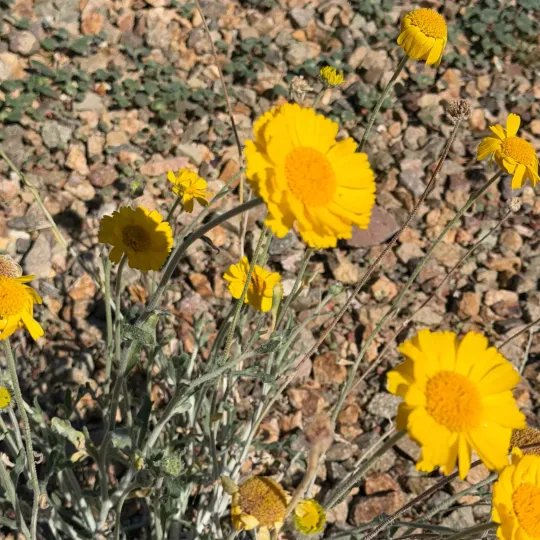
Desert marigold, or Baileya multiradiata, is a striking member of the Asteraceae family. It is widely recognized for its vibrant yellow blooms that persist throughout the growing season.
Sowing should take place in early spring after the last frost. The seeds require warmth to germinate effectively, typically preferring soil temperatures ranging from 60 to 70 degrees Fahrenheit.
When starting indoors, use a well-draining seed-starting mix. Cover the seeds very lightly with soil, as they need a small amount of light to initiate the germination process.
Direct seeding into the garden is often the most successful method. Choose a location with full sun exposure and thin the seedlings to approximately 12 inches apart to allow for proper airflow.
The seeds are relatively small, so ensure the soil surface remains moist but not waterlogged during the initial stages of development to avoid seed mortality.
Growing requirements
This species is native to the arid environments of the Southwestern United States and Northern Mexico. It is specifically adapted to survive in extreme heat and low rainfall conditions.
Soil requirements are straightforward: the plant demands sandy or rocky soil with exceptional drainage. It is highly intolerant of heavy clay or soils that hold moisture for extended periods.
Desert marigold thrives in full sun. In environments with too much shade, the plant will become leggy and fail to produce its characteristic dense floral displays.
Low humidity levels are ideal. In areas with high atmospheric moisture, the plants may show reduced vigor and susceptibility to environmental stress.
Maintenance involves very minimal fertilization. Over-fertilizing can lead to excessive foliage growth at the expense of flower production, which is the primary decorative feature of this plant.
Main diseases and pests
The most significant threat to desert marigold is root rot caused by overwatering. Ensuring the soil is completely dry between irrigation cycles is the best preventative measure.
Powdery mildew can occur in conditions where airflow is restricted or during periods of unusually high humidity. Providing adequate spacing between plants is crucial for health.
Aphids can sometimes congregate on the undersides of leaves or on the flower stalks. A gentle spray of water or organic insecticidal soap is often sufficient to control these infestations.
Snails and slugs can damage seedlings in the spring. Implementing mechanical barriers or using non-toxic bait is recommended if these pests are present in the planting area.
By prioritizing site selection and moisture control, growers can minimize the need for chemical intervention, preserving the natural beauty and resilience of this desert native.
Harvesting
While primarily an ornamental crop, harvesting is typically associated with the collection of seeds for future seasons. Seeds should be gathered once the flower heads have dried thoroughly on the stem.
The best time to harvest is during a dry afternoon when the heads are brittle. This ensures that the seeds are fully mature and will have high viability for the following year.
Place the dried heads in a paper bag and shake them to release the seeds from the chaff. Clean the seeds by removing debris and store them in a cool, dry, and dark environment.
For those interested in cut flower arrangements, the stems can be cut when the flowers are in the early stages of opening. Use clean tools to prevent the introduction of pathogens.
Proper harvest management helps to maintain a clean garden area, reducing the spread of pests and potential fungal pathogens that may persist on decaying flower stalks.