
Babiana nana
Babiana nana (Andrews) Spreng.
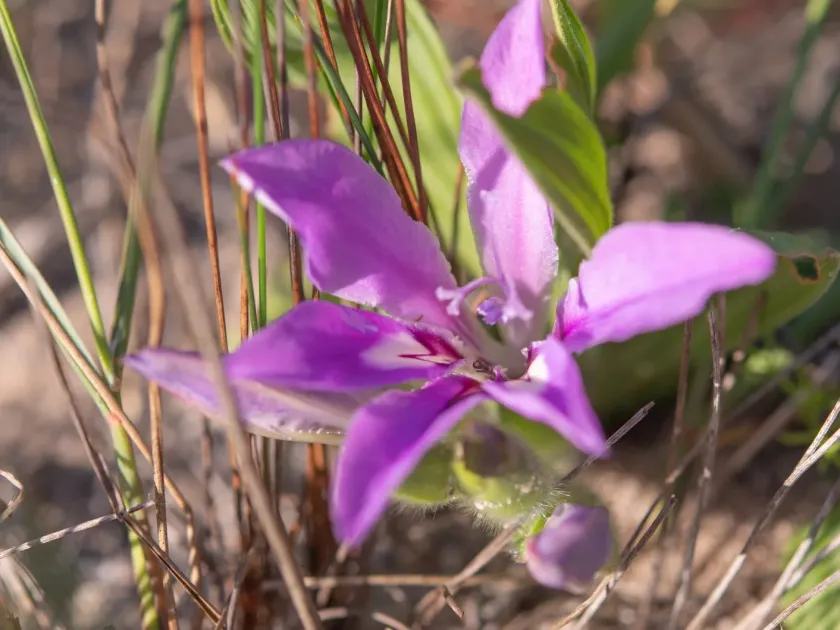
Description
Sowing dates
Planting of Babiana nana bulbs is carried out exclusively in the spring season when the soil at a depth of ten centimeters warms up to 10–12 degrees Celsius. It is crucial to wait until the threat of late frosts has passed, as the tender shoots are highly sensitive to low temperatures.
Bulbs are planted in pre-prepared furrows or individual holes at a depth of 5–8 centimeters. Planting density depends on design objectives, but a distance of 10–15 centimeters between plants is considered optimal, ensuring proper air circulation.
Pre-treatment of planting material with fungicides helps protect the culture against soil-borne pathogens. In regions with harsh winters, Babiana is grown as an annual crop or requires mandatory lifting and storage of bulbs in autumn.
The choice of planting site should be focused on maximally illuminated areas protected from strong winds. Good lighting is a critical factor for floral bud formation and the intensity of petal coloration.
To accelerate flowering in regions with cool summers, container cultivation is practiced with subsequent transplanting into the open ground. This method allows for the control of root system conditions during the initial stages of vegetation.
Growing requirements
Babiana nana, belonging to the Iridaceae family, requires light, loose, and well-drained soils with a neutral or slightly acidic pH. The plant strictly does not tolerate waterlogging, which leads to rapid rotting of the bulbs.
During the active vegetation period, the crop requires moderate but regular watering. The soil should remain moist but not waterlogged, which is achieved by adding sand or fine gravel to the planting substrate to improve aeration.
For full development, the plant requires intensive sunlight for at least 6–8 hours a day. In partial shade, Babiana stems may become etiolated, and the intensity of flowering decreases significantly.
The crop is sensitive to an excess of nitrogen fertilizers, which stimulate vegetative mass growth at the expense of flower quality. It is recommended to use balanced mineral complexes with a predominance of phosphorus and potassium to support bulb health.
The temperature optimum for vegetation is 20–25 degrees Celsius. Babiana originates from South Africa, so adaptation to the specific conditions of temperate climates requires careful humidity control and protection of the soil from excessive cooling.
Main diseases and pests
The primary threat to this crop is fungal diseases of the root system, which develop under excessive soil moisture. Gray mold and fusarium can destroy plantings within a few weeks if preventative measures are not taken.
Among pests, thrips and spider mites cause the most damage, sucking juices from the leaves and causing deformation and yellowing. Weakened plants become less resistant to unfavorable environmental factors.
Slugs and snails can damage young leaves of Babiana during rainy periods. Regular weeding around the plants significantly reduces the risk of pest infestation and improves the overall phytosanitary conditions in the garden.
If signs of viral diseases appear, such as spots or mosaic patterns on the leaves, the affected specimens must be immediately removed and destroyed. Viral infections cannot be treated and can spread rapidly through insect vectors.
Prevention includes crop rotation: it is not recommended to plant Babiana in the same location for at least three years. Using clean, verified planting material is the main measure for protection against soil infections.