
Russian pigweed
Axyris amaranthoides L.
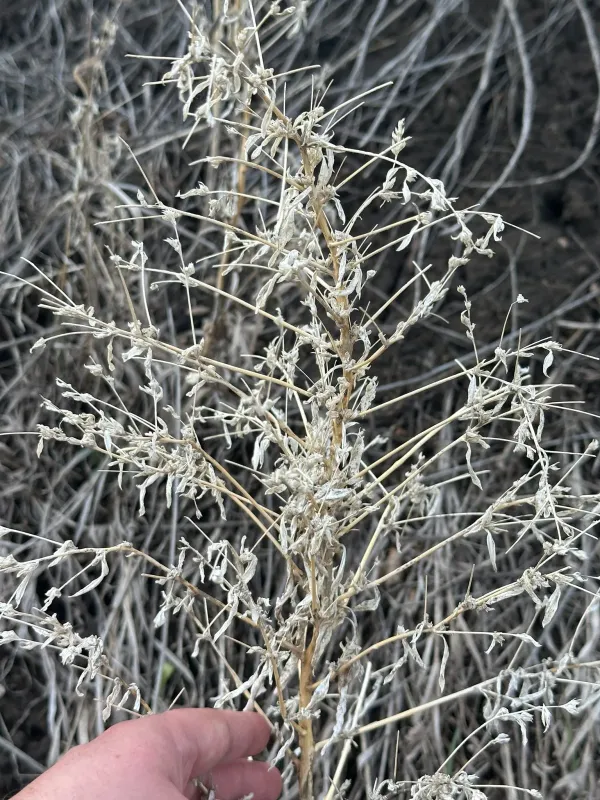
Description
Sowing dates
Russian pigweed is an annual herbaceous plant belonging to the Amaranthaceae family, commonly found in disturbed soils and cultivated fields across temperate zones.
Seed germination typically occurs in early spring, as soon as the soil temperatures reach approximately 5 degrees Celsius, often preceding major crop plantings.
Agricultural management requires rigorous pre-seeding tillage to eliminate initial cohorts of the weed, as the plant can rapidly establish itself in open, non-shaded environments.
The growth cycle is relatively fast, allowing the species to produce vast quantities of seeds before the main harvesting season of many cereal crops.
Successive flushes of germination throughout the season necessitate integrated management strategies, combining mechanical tillage with herbicide application.
Growing requirements
The plant is highly adaptable and thrives in a wide range of soil types, showing a particular preference for loose, well-drained, and nutrient-rich soils.
It is exceptionally drought-tolerant and can survive in harsh, arid climates where other competing vegetation might fail to thrive.
Russian pigweed is photophilous, meaning it requires high levels of direct sunlight and is effectively suppressed by dense crop canopies that shade the soil.
It exhibits resilience against salinity, allowing it to colonize edges of fields and areas where soil quality has been historically degraded.
Adequate moisture levels during the germination phase enhance the competitiveness of this species, making early control measures critical.
Main diseases and pests
The plant serves as a significant reservoir for various pests, particularly aphids, which can subsequently migrate to economically valuable crops.
Fungal pathogens, such as powdery mildew, can colonize the foliage during humid conditions, reducing the overall health of surrounding vegetation.
Chemical control is often necessary, with post-emergence herbicides proving effective if applied during the early vegetative stages before seed production begins.
- Implementation of effective crop rotation schedules.
- Mechanical cultivation of inter-row spaces in row crops.
- Application of selective herbicides.
Because the seeds remain viable in the soil for several years, long-term monitoring and persistent eradication efforts are required to clear infested fields.