
Himalayan Aucuba
Aucuba himalaica
Description
Growing requirements
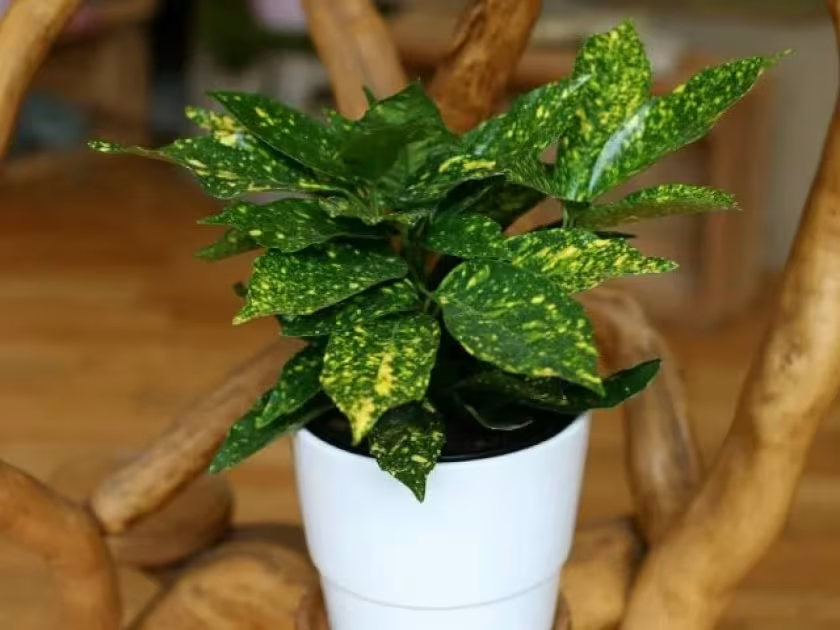
Himalayan Aucuba (Aucuba himalaica) is an evergreen shrub species belonging to the Garryaceae family. It is native to the forested regions of the Himalayas and parts of China, where it thrives in shaded, cool, and humid environments.
Botanically, the plant is characterized by its serrated, lance-shaped leaves and its dioecious nature. It produces small, inconspicuous flowers, followed by bright red drupes that serve as a significant ornamental feature in temperate gardens.
The plant requires sheltered sites with partial to full shade, as direct sunlight can cause leaf scorching. It prefers moderate temperatures and high atmospheric humidity to maintain its vigorous growth habit.
Cultivation success relies on well-draining, nutrient-rich soils with a slightly acidic to neutral pH. Proper soil moisture is critical; while the plant likes humidity, waterlogged soil can be lethal to its root system.
In landscaping, this species is valued for its ability to brighten up dark corners of the garden. It is also used as a container plant in areas where winter temperatures fall below the plant's tolerance threshold.
Main diseases and pests
Common pests affecting Himalayan Aucuba include scale insects and spider mites, particularly in indoor environments where the air is dry and static.
Fungal pathogens such as leaf spot can occur if the foliage remains wet for extended periods or if there is poor air circulation around the shrub.
Root rot is a major risk factor if the planting site lacks an efficient drainage system, leading to anaerobic conditions in the soil.
Preventative measures involve regular inspection of the underside of leaves and maintaining optimal humidity levels to discourage mite infestations.
If symptoms of disease emerge, the application of appropriate systemic fungicides or the physical removal of infected tissues is strongly recommended.