
Japanese laurel
Aucuba japonica Thunb.
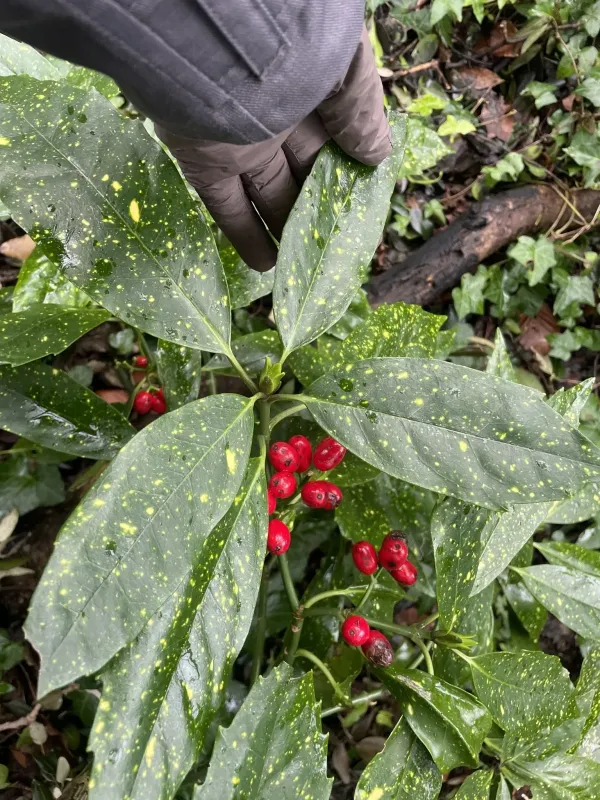
Description
Growing requirements
Japanese laurel (Aucuba japonica Thunb.) is a popular evergreen ornamental shrub belonging to the Garryaceae family. Native to the humid subtropical regions of Japan, China, and Korea, it is well-known for its glossy, leathery leaves and high tolerance for low-light conditions.
The plant thrives in moderate conditions, preferring a summer temperature of 18–20°C. During the winter, it enters a dormant phase and requires cooler environments between 8–12°C to ensure healthy growth in the following season and maintain its vibrant foliage.
Cultivation requirements include a well-draining, nutrient-rich soil mix. Consistent moisture is essential during the growing season; however, overwatering must be strictly avoided to prevent root damage, which is a common issue for this specific species.
Lighting is a crucial factor: while the plant is shade-tolerant, variegated varieties require brighter indirect light to preserve their unique patterns. Direct sun exposure is detrimental as it leads to severe leaf scorching and loss of decorative quality.
In commercial and landscape settings, the Japanese laurel is valued for its hardiness and aesthetic appeal. It is widely used in greenhouse production, office interiors, and shaded garden areas where other ornamental plants might fail to establish.
Main diseases and pests
Common pests affecting Aucuba japonica include spider mites, scale insects, and mealybugs. These pests typically infest the plant in dry environments, necessitating regular monitoring of the leaf undersides and occasional misting to maintain humidity levels.
Regarding diseases, the most prevalent issue is root rot caused by stagnant water in the root zone. Leaf spotting may also occur due to fungal pathogens, usually triggered by poor air circulation or excessive moisture levels, requiring immediate adjustment of cultivation practices.