
Indian aster
Asteromoea indica
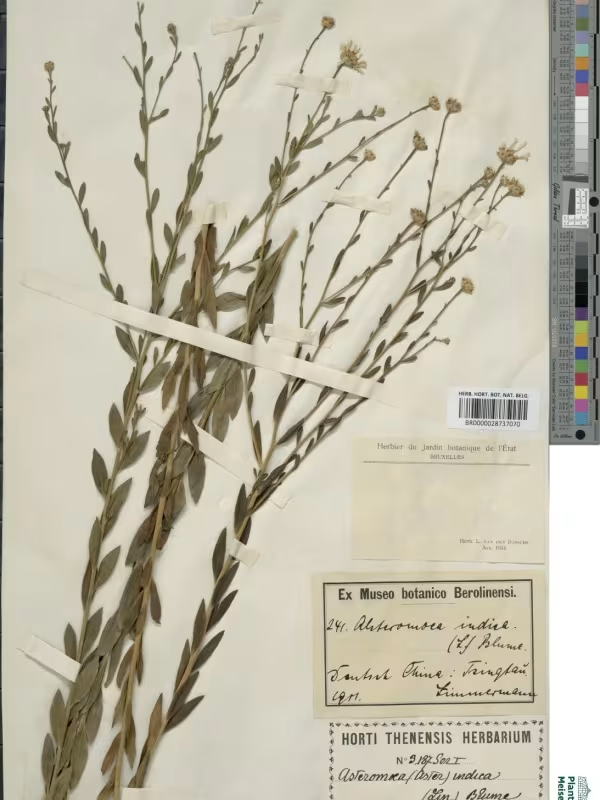
Description
Sowing dates
Indian aster (Asteromoea indica), a member of the Asteraceae family, is a vigorous perennial plant widely appreciated for its decorative daisy-like flowers. It is native to East Asia and thrives in various temperate habitats.
Propagation is typically performed via seed sowing in spring or by division of the creeping rhizomes. For direct sowing, gardeners should wait until the soil has warmed up in late spring to ensure optimal germination rates.
When propagating by division, mature plants should be lifted and separated in early spring or late autumn. This practice helps maintain the plant's vigor and prevents the clumps from becoming too congested over time.
Spacing is a critical factor, as the plant spreads through rhizomes. A distance of approximately 40 cm between individual plants allows for healthy growth and reduces competition for nutrients.
Seedlings or divisions should be planted at the same depth as they were previously grown. Immediate watering after transplanting is essential to establish good contact between the roots and the surrounding soil.
Growing requirements
This species performs best in full sun but demonstrates considerable tolerance for partial shade. In warmer climates, protection from the intense afternoon sun can help prolong the blooming period.
Indian aster is versatile regarding soil types, though it prefers rich, moist, and well-drained loam. The soil should be kept consistently moist during the active growing season to support its vigorous development.
The plant is highly hardy and can withstand cold winters without special protection in most temperate zones. It adapts well to varying environmental conditions, provided that extreme waterlogging is avoided.
During the peak growing season, the application of a balanced fertilizer can enhance flower production. However, over-fertilization should be avoided to prevent excessive vegetative growth at the expense of blooming.
Maintenance is relatively low, requiring only occasional weeding and the removal of spent flowers if self-seeding needs to be controlled. Its aggressive growth habit may require containment in formal garden settings.
Main diseases and pests
Indian aster is generally robust and rarely suffers from severe pest or disease pressure. Its resilient nature makes it an excellent choice for low-maintenance garden designs.
Powdery mildew can occasionally appear, especially during hot, humid summers with poor air circulation. Improving spacing and ensuring adequate sunlight usually mitigates this problem effectively.
Aphids might feed on tender new growth; however, they are often kept in check by natural predators like ladybugs. Chemical intervention is only recommended in cases of heavy infestation.
Root rot is the most significant threat to plant health, typically caused by poorly drained soil or excessive irrigation. Ensuring the soil has adequate drainage is the most effective preventative measure.
Slugs and snails can occasionally graze on young shoots in the spring. Protective barriers or organic molluscicides are effective methods to preserve the integrity of new foliage during early development.