
Asteranthera ovata
Asteranthera ovata
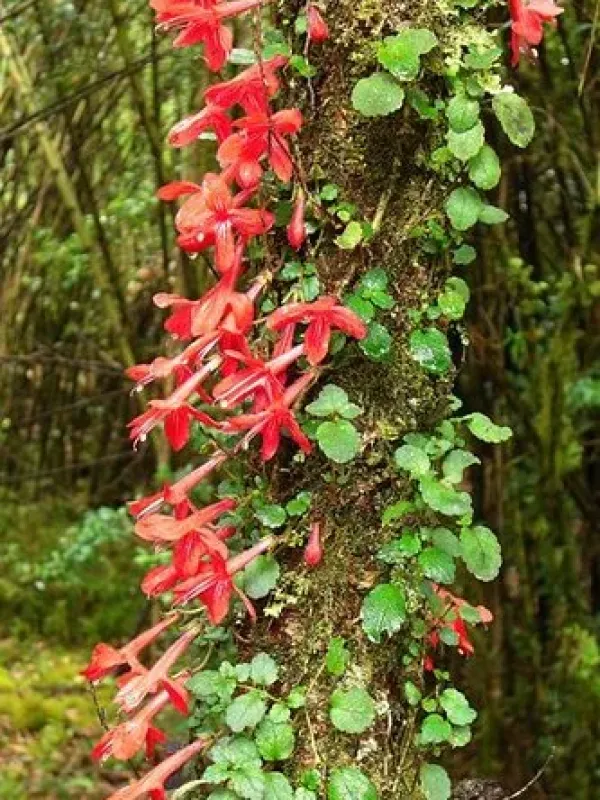
Description
Growing requirements
Asteranthera ovata is a unique evergreen perennial climbing vine belonging to the Gesneriaceae family. As the only species in its genus, it is a highly prized botanical specimen that offers a distinct aesthetic for specialized gardens.
The plant originates from the cool, temperate rainforests of Chile and Argentina. In its native habitat, it typically behaves as a lithophyte or epiphyte, scaling trees or cliff faces within the shade of the dense forest canopy.
Cultivation requires specific environmental conditions that mirror its home: consistently high humidity, cool temperatures, and protection from direct sunlight. The growing medium must be acidic, well-draining, and rich in organic matter.
Botanically, it is identified by its opposite, ovate leaves and striking, tubular red flowers with intricate internal spotting. These blooms provide significant visual appeal during the summer months when the plant is most active.
While the species can tolerate occasional light frosts, it is very sensitive to environmental stress caused by drought or excessive heat. Proper site selection in a sheltered, shaded garden area is crucial for long-term health.
Main diseases and pests
Root rot is the most significant threat to Asteranthera ovata, usually caused by overwatering or poor soil drainage. Maintaining a careful balance of moisture without waterlogging the root zone is the primary challenge for growers.
Slugs and snails are major pests that can rapidly defoliate the plant, particularly in humid settings. Implementing physical barriers or traps is recommended to protect the lush foliage from these gastropods.
Spider mites may infest the plant if humidity levels are allowed to drop too low, especially during dry spells or in greenhouse conditions. Increasing ambient moisture and ensuring good air circulation are effective preventative measures.
Aphids can occasionally colonize young stems and flower buds, weakening the plant's growth. Manual removal or the use of mild horticultural soaps are often sufficient to manage these infestations without harming the plant.
Fungal infections of the foliage can occur if leaves remain constantly wet in stagnant air. Ensuring adequate spacing and light airflow around the climber helps keep the leaves healthy and prevents the onset of mildew or spot diseases.