
Hornwort
Aspiromitus punctatus
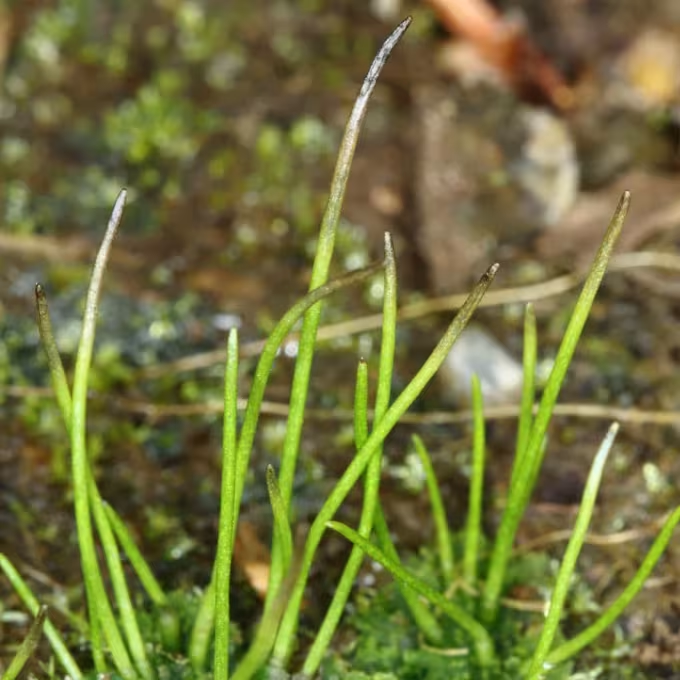
Description
Growing requirements
Aspiromitus punctatus, commonly known as a type of hornwort, belongs to the division Anthocerotophyta. It is a non-vascular spore-bearing plant and is not categorized as an agricultural crop, though it frequently occupies disturbed agricultural or open soil habitats.
The gametophyte of this plant forms a small, dark green, rosette-like thallus. The surface is distinctly punctuated with pores, which facilitate gas exchange. This structure is typically found pressed against damp soil surfaces, appearing inconspicuous among grasses or other soil-covering species.
A significant biological feature of this species is its symbiotic association with Nostoc cyanobacteria. These bacteria reside within the thallus cavities and fix atmospheric nitrogen, providing essential nutrients that allow the plant to colonize nutrient-poor, moist environments effectively.
The plant strictly requires high moisture levels to maintain its metabolic activities. It is frequently observed on clayey, damp soils, stream banks, and recently disturbed wet patches of land where competition from taller vascular plants is temporarily suppressed.
There are no agricultural practices or harvesting methods associated with this species as it holds no commercial value. It is primarily studied by botanists and ecologists interested in primitive plant evolution and the role of symbiotic interactions in early plant life forms.
Main diseases and pests
The primary threats to Aspiromitus punctatus are habitat loss and environmental pollution. The application of herbicides in agricultural zones is detrimental to these plants, as they cannot survive the chemical shifts in soil composition or the resulting competition from weeds.
Furthermore, climate-induced drying of wetlands and riparian areas poses a massive threat. Since the plant lacks a sophisticated water-conducting system, persistent drought or changes in drainage patterns often lead to the rapid desiccation and local extinction of the colony.