
Hollow-stemmed asphodel
Asphodelus fistulosus L.
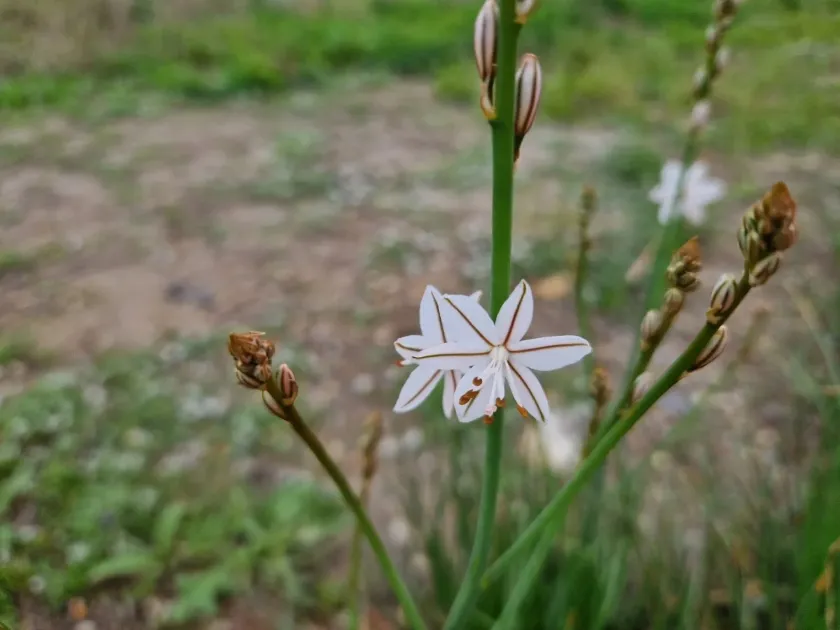
Description
Sowing dates
Hollow-stemmed asphodel (Asphodelus fistulosus L.) is a perennial herbaceous plant belonging to the Xanthorrhoeaceae family. It is distinct for its hollow, tubular leaves and delicate, star-shaped flowers produced on long stalks.
Sowing of seeds is best performed in the autumn. Natural stratification during winter months is essential for breaking seed dormancy and ensuring uniform germination in the following spring.
For container-grown seedlings, seeds should be sown in early spring in well-drained substrate, maintaining a consistent moisture level to support initial seedling development.
Vegetative propagation by division of established clumps is highly effective. This operation should be carried out during the dormant season to minimize transplant shock.
Proper spacing is crucial; plants should be set roughly 30 cm apart to ensure sufficient airflow, which significantly reduces the risk of foliar diseases during the humid season.
Growing requirements
Native to the Mediterranean region, this plant thrives in full sun exposure. It requires at least 6 to 8 hours of direct sunlight per day to maintain healthy growth and robust flowering.
The species is highly adaptable to poor, sandy, or rocky soils, provided they offer excellent drainage. It performs poorly in heavy, clay-rich soils that prone to waterlogging.
It is remarkably drought-tolerant once established. Supplemental irrigation is generally unnecessary unless during prolonged periods of extreme heat and severe drought.
Minimal fertilization is required as the plant is adapted to nutrient-poor environments. An annual application of balanced organic compost in spring is typically sufficient to support growth.
In terms of climate, it prefers mild, temperate conditions. While it can withstand light frosts, it is not considered fully hardy in regions with severe, prolonged freezing temperatures.
Main diseases and pests
The primary threats to Asphodelus fistulosus include various root rot pathogens, which are typically triggered by soil saturation and lack of proper aeration in the root zone.
Fungal leaf spots can occur when air circulation is poor, particularly in dense plantings. Ensuring enough distance between plants is a primary preventative measure.
Aphids can cause damage by feeding on the sap of young flower spikes. If left untreated, they can stunt growth and transmit viral pathogens that reduce plant vigor.
Preventative practices include the removal of dead or decaying organic matter from around the crown of the plant to eliminate overwintering sites for pests and fungal spores.
Monitoring the soil moisture levels is critical; avoiding overhead irrigation during evening hours helps keep foliage dry and significantly reduces the susceptibility to common fungal infections.