
European wild ginger
Asarum europaeum L.
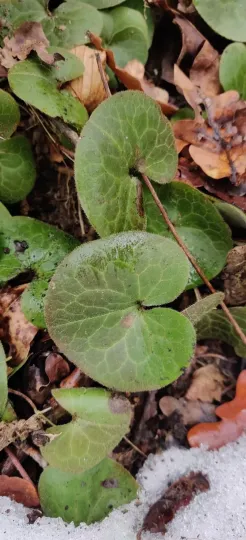
Description
Growing requirements
European wild ginger (Asarum europaeum L.) is a perennial herb belonging to the Aristolochiaceae family. It is native to the forests of Europe and parts of Asia, where it thrives in cool, shaded environments under forest canopies.
The crop requires humus-rich, moist, and well-drained soils. In an agricultural or garden setting, adding leaf mold or compost is essential to replicate the natural habitat and maintain the necessary soil acidity and fertility.
The plant is highly shade-tolerant and sensitive to direct sunlight, which can scorch its glossy, dark green leaves. Ideally, it should be planted in areas with dappled light or full shade to ensure optimal development.
Climate requirements include protection from extreme heat and arid conditions. The plant is exceptionally hardy, surviving harsh winters, but it needs consistent moisture throughout the growing season to prevent dormancy.
Propagation is primarily done via division of the rhizomes in early spring or autumn. Plants should be spaced 20–25 cm apart to allow for the development of a dense, carpet-like ground cover over time.
Main diseases and pests
European wild ginger is generally resistant to many common plant diseases. However, root rot can occur if the soil remains waterlogged or if the planting site lacks proper air circulation among the foliage.
Gastropods, particularly slugs and snails, are the primary pests. They are attracted to the succulent foliage and can cause significant aesthetic damage to the plant's leaves during wet spring weather.
Spider mites may occasionally infest the plant during hot and dry spells. Increasing atmospheric humidity through misting or site selection is the best way to prevent such infestations.
Weed management is vital in the early stages of establishment. Hand-weeding is recommended as the plant has shallow roots that can be easily disturbed by mechanical tools like hoes or cultivators.
Integrated pest management strategies should emphasize natural barriers and biological controls, as chemical residues must be avoided when harvesting the plant for traditional medicinal purposes.
Harvesting
The harvest focuses on both the rhizomes and the leaves, which are used in pharmaceutical and herbal applications. Harvesting is best performed during the plant's dormant phase or early growth stages.
Rhizomes are carefully excavated, washed, and dried in low-temperature conditions (below 40 degrees Celsius) to ensure the preservation of volatile oils and medicinal constituents.
Leaf harvesting should be done sparingly to avoid weakening the plant's energy reserves. Ideally, only about one-third of the foliage should be removed from any individual clump during a single season.
Sustainable harvesting involves replanting small sections of the root mass to maintain the population. Proper crop rotation or site rotation every 5–7 years is recommended for commercial growers.
Dried product should be stored in opaque, airtight containers to prevent degradation of light-sensitive compounds. Maintaining a cool, stable storage temperature preserves the potency of the dried material.