
Giant reed
Arundo donax L.
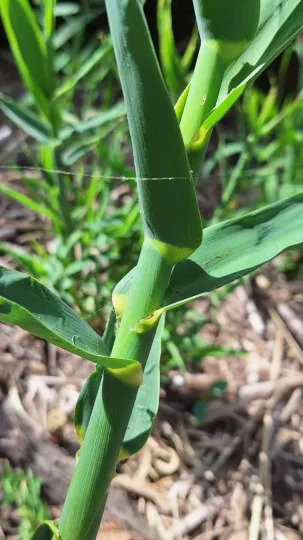
Description
Sowing dates
Giant reed (Arundo donax L.) is a member of the Poaceae family. It is a robust perennial grass typically propagated through vegetative means, specifically using rhizome cuttings or stem cuttings, as the plant rarely produces viable seeds.
The best time for planting is early spring, once the soil temperature consistently reaches 10-12°C. This allows the plant to establish its extensive root system before the onset of extreme summer heat.
For industrial plantations, rhizomes should be planted at a depth of 10-15 cm. Mechanical planters are often used for large-scale operations to ensure efficient placement and coverage of the planting material.
Row spacing is generally maintained between 70 cm and 100 cm. This spacing provides enough room for the plants to spread while allowing farm machinery to navigate the field for maintenance and harvesting activities.
Initial irrigation after planting is crucial to ensure good soil-to-rhizome contact. Proper hydration during the first weeks significantly increases survival rates and promotes vigorous early shoot development.
Growing requirements
Giant reed is a C4 plant that thrives in warm, temperate, and tropical climates. It is highly adaptable to various soil types, including alluvial, sandy, and clay soils, and shows remarkable tolerance to salinity.
The plant requires full sun exposure for optimal growth. While it is drought-tolerant once established, providing adequate moisture during the first year of life is essential for developing the massive biomass production it is known for.
It prefers a soil pH range between 6.0 and 8.0. Due to its tolerance to waterlogged conditions, it is frequently utilized in riparian areas for erosion control and wastewater treatment due to its rapid nutrient uptake.
In colder regions, the rhizomes need protection from extreme frost. A layer of mulch or soil cover can prevent the rootstock from freezing, which is critical for ensuring the longevity of the plantation.
Fertilization, particularly with nitrogen, can significantly boost yield on marginal lands. However, the plant is known for its ability to produce substantial biomass even on poor soils with minimal inputs, making it a low-maintenance energy crop.
Yield
Arundo donax is one of the highest-yielding biomass crops globally, capable of producing between 20 and 40 tons of dry matter per hectare annually. This high productivity is maintained for 15 to 20 years without the need for replanting.
The rapid growth rate, sometimes exceeding 10 cm per day during peak season, allows for multiple applications in the green economy. It serves as an excellent source of feedstock for bio-energy production, including pelletizing and gasification.
Beyond energy production, the culms are historically used in the woodwind instrument industry, particularly for high-quality reeds. It is also a valuable source of cellulose for the paper and pulp industry and fiberboard manufacturing.
Current research explores the potential for second-generation bioethanol production from giant reed. Its ability to convert solar energy into biomass efficiently makes it a strategic asset in reducing fossil fuel dependency.
Economic profitability depends on the scale of cultivation and the proximity to processing facilities. By optimizing harvest logistics, farmers can achieve high returns with relatively low annual maintenance costs.
Main diseases and pests
Giant reed is naturally hardy and resistant to many conventional crop diseases. This inherent robustness makes it an excellent candidate for low-chemical farming systems and ecological restoration projects.
Pests are generally not a significant concern, although some insects may feed on the leaves or stems in certain regions. The plant's high silica and chemical defense content make it unappealing to most common agricultural herbivores.
The most significant threat during the establishment phase is weed competition. Young reed plants are slow to grow initially, so early season weeding or herbicide application is vital to ensure they are not overshadowed.
Fungal issues, such as rusts, may appear in highly humid environments with poor air circulation. Proper plant spacing and field management are usually sufficient to keep these risks at a manageable level without fungicides.
Continuous monitoring of the plantation health is recommended to ensure that any localized outbreaks are treated promptly. However, compared to standard row crops, giant reed requires significantly less intensive protection.
Harvesting
Harvesting is typically carried out during the dormant season, specifically between late autumn and early spring. During this time, the moisture content of the stalks drops naturally to around 15-20%, ideal for direct combustion.
Specialized forage harvesters equipped with shredding heads are used for the operation. The harvest process involves cutting the stems as close to the ground as possible to encourage uniform regrowth in the subsequent season.
- Harvest timing: November to February.
- Processing: Shredding during harvest for direct baling or collection.
- Storage: Dry storage is preferred to maintain heating value and prevent biomass degradation.
Efficient logistics are key to a successful harvest. Because the crop remains standing in the field, harvest can be scheduled flexibly throughout the winter months, allowing for optimal use of equipment and labor.
The processed biomass is easy to transport in shredded form, reducing costs associated with bulk hauling. Proper post-harvest management ensures high-quality fuel for power plants or thermal heating units.