
Pale prickly poppy
Argemone ochroleuca Sweet
Description
Sowing dates
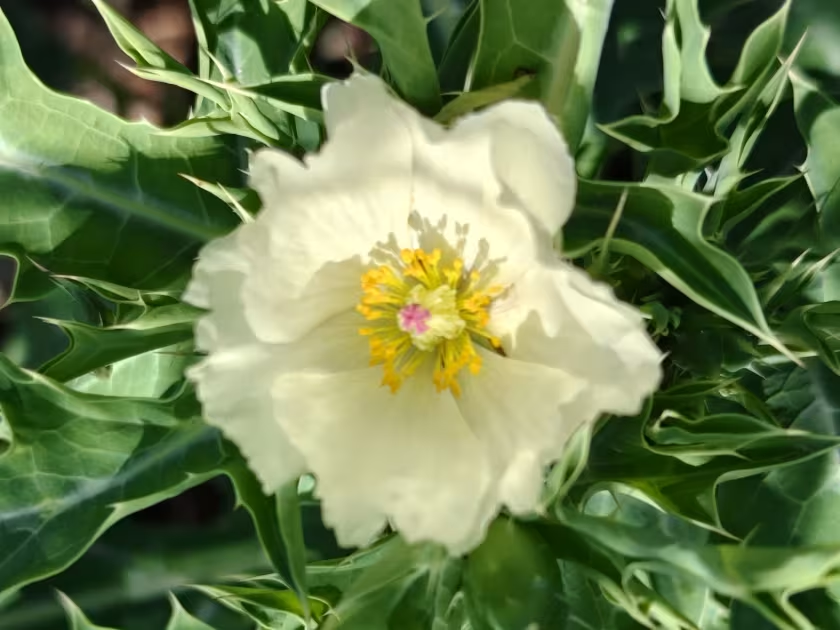
Argemone ochroleuca, commonly known as the pale prickly poppy, belongs to the Papaveraceae family. It is an annual plant native to Mexico, often found in arid and semi-arid regions, known for its spiny, glaucous-green foliage and pale yellow flowers.
Seeds are typically sown directly into the soil in early spring once the risk of frost has passed. They require soil temperatures between 18 and 22 degrees Celsius to ensure optimal germination and early growth.
The seeds should be sown thinly at a depth of about 0.5 cm. Since the seeds require light for germination, it is essential not to bury them too deeply in the substrate during the initial planting process.
Thinning the seedlings is necessary to maintain a spacing of 30 to 40 cm between individual plants. This promotes air circulation and prevents the spread of fungal diseases in the maturing crop.
Due to its high adaptability, the plant can spread aggressively via self-seeding. In agricultural settings, it is often treated as a troublesome weed, though it has historical uses in traditional medicine.
Growing requirements
The pale prickly poppy thrives in full sun exposure. It is highly drought-tolerant, making it suitable for regions with limited rainfall, provided the soil remains well-drained and aerated.
It prefers sandy or rocky soils with a neutral or slightly alkaline pH. Clay-heavy or waterlogged soils should be avoided as they significantly increase the risk of root rot and stunted growth.
The plant is not frost-tolerant and requires a warm growing season. It performs exceptionally well in harsh conditions where other ornamental crops might struggle, provided it has access to direct sunlight.
Minimal fertilization is required. Excessive nitrogen application promotes excessive foliage growth but often leads to reduced flowering and susceptibility to pest infestations throughout the growing season.
Irrigation should be kept to a minimum once the plants are established. The plant is perfectly adapted to dry environments and will show signs of stress if constantly exposed to excessive humidity.
Main diseases and pests
Pest issues include aphids and various leaf-eating caterpillars that may feed on the foliage. The sharp spines serve as a natural defense mechanism against larger herbivores and grazing animals.
Powdery mildew is the most common fungal disease, typically developing under high humidity conditions or poor airflow. Regular monitoring of the foliage is essential to detect early symptoms.
Root rot is a major threat in soils with poor drainage. Once established, this fungal infection is difficult to treat, often resulting in the sudden wilting and eventual death of the affected plant.
Integrated pest management strategies should focus on preventive measures, such as maintaining adequate space between plants and ensuring optimal soil drainage throughout the vegetative period.
As the plant contains toxic alkaloids, careful handling is advised during harvesting or weeding. Protective gear should be worn to prevent skin irritation from the sharp spines and the plant's sap.