
Mexican prickly poppy
Argemone mexicana L.
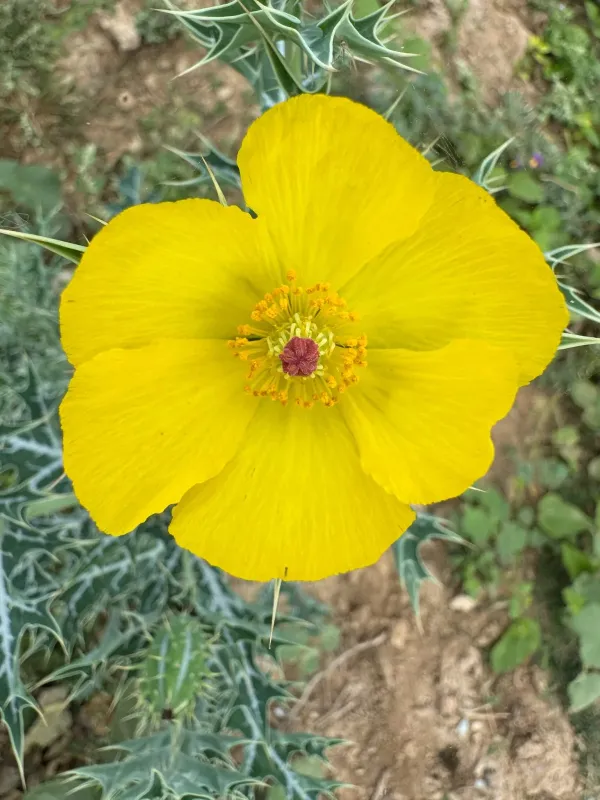
Description
Sowing dates
Argemone mexicana, commonly known as the Mexican prickly poppy, is an annual herb of the Papaveraceae family. In optimal conditions, sowing is performed in the spring once the soil temperature is consistently above 15 degrees Celsius.
Seeds should be planted at a shallow depth of 1-2 centimeters, ensuring good contact with moist soil. This species exhibits excellent germination vigor and can establish itself rapidly in diverse environmental conditions.
For commercial cultivation, row planting with a spacing of 40-50 centimeters is recommended to facilitate management and mechanical weeding. The crop is known for its ability to occupy space quickly.
In many regions, the plant is a prolific self-seeder, meaning population renewal often happens naturally. Autumn sowing may be feasible in climates with mild winters, provided the seedlings are protected from frost.
Quality seed selection is crucial for uniform crop establishment, especially when direct sowing into fields with varied soil composition.
Growing requirements
The Mexican prickly poppy is highly adaptable, thriving in sunny and open areas with minimal input requirements. It prefers light, well-drained sandy or loamy soils, making it suitable for marginal land cultivation.
While it exhibits extreme drought tolerance, the plant does not perform well in waterlogged or poorly aerated soils. It is well-suited for tropical and subtropical climates where it can endure fluctuating temperatures.
The plant is not highly demanding regarding soil pH, although it shows the most robust growth in neutral to slightly alkaline environments. Its strong taproot system allows it to extract nutrients and moisture even from nutrient-poor soil.
In agricultural practice, maintaining optimal density is important. Overcrowding can lead to stunted growth and reduced seed yield, as the plants compete for sunlight and soil nutrients.
Proper field maintenance involves monitoring soil drainage, especially during the early growth stages, to prevent root-related issues common in excessively wet periods.
Yield
The primary economic value of Argemone mexicana lies in its oil-rich seeds, which contain up to 40% non-edible technical oil. This oil is extensively used in paint manufacturing, soap production, and as a potential biofuel feedstock.
Seed yields typically range from 800 to 1200 kg per hectare, depending on local climate conditions, sunlight availability, and general crop management practices.
The plant also provides biomass that can be utilized for industrial fiber production. Additionally, the pharmaceutical industry values the plant for its specific alkaloids, which possess antimicrobial and antifungal properties.
To maximize yields, it is essential to monitor the maturity of the seed pods. As pods ripen unevenly, harvesting must be timed carefully to prevent significant losses through premature shattering.
Overall crop productivity is sustained by the plant's natural resilience, reducing the need for intensive synthetic input and improving the return on investment in low-fertility areas.
Main diseases and pests
The Mexican prickly poppy is naturally protected against many pests by its bitter, toxic latex and sharp spines. These physical and chemical defenses discourage most common agricultural pests and herbivores.
In high-humidity conditions, the crop can be susceptible to fungal diseases such as root rot. Proper airflow and avoiding overly dense plantings serve as effective preventative measures against such outbreaks.
Occasionally, aphid colonies may form on young foliage during the early growth phase, though this rarely poses a significant threat to the plant's overall health or development.
The most substantial challenge in cultivation is weed competition during the seedling stage. Regular cultivation of inter-row spaces is necessary to allow the poppies to establish dominance.
Because the plant is toxic to livestock, it is vital to ensure that no plant debris contaminates fodder or pasture areas in mixed farming systems.
Harvesting
Harvesting is typically initiated when the seed pods transition from green to a brown, leathery state and begin to dehisce. Precise timing is necessary to minimize the risk of seeds dropping before collection.
Industrial harvesting utilizes specialized combines adjusted for gentle threshing to prevent seed damage. Post-harvest, seeds must be dried immediately in well-ventilated conditions to reach a storage moisture content of 8-10%.
Storage should be performed in a cool, dry environment. Due to the high oil content, seeds are prone to rancidity if exposed to high heat or excess moisture during long-term storage.
Cleaning processes involving screens and air classification are essential to remove contaminants like pod fragments and debris, thereby increasing the marketability of the technical oilseed product.
For small-scale operations, manual cutting of pods is preferred to maximize the retention of high-quality seeds and minimize losses typically associated with mechanized harvesting.