
Argan tree
Argania spinosa (L.) Skeels
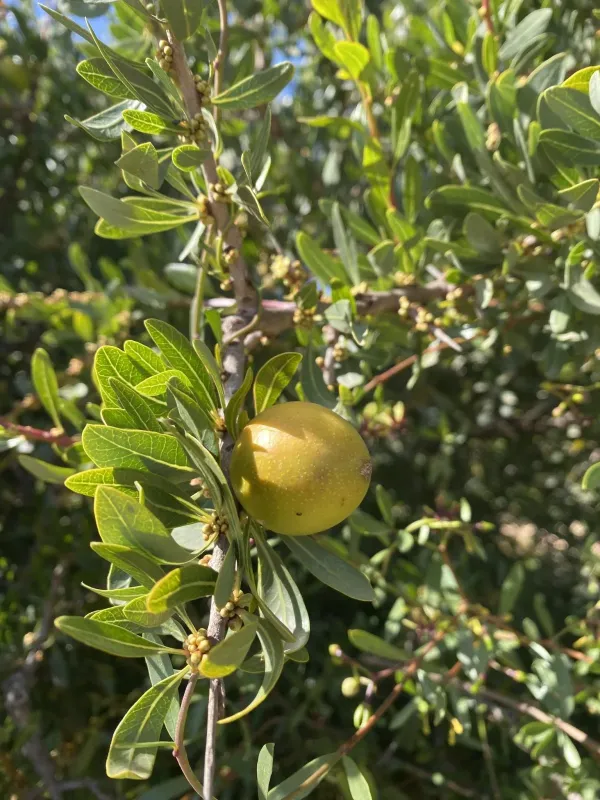
Description
Growing requirements
The argan tree (Argania spinosa) belongs to the Sapotaceae family. It is a long-lived, hardy species native to the arid and semi-arid regions of southwestern Morocco, playing a critical role in local biodiversity.
This crop is highly adapted to extreme conditions, thriving in areas with high solar radiation and scarce rainfall. Its deep root system allows it to reach water reserves far below the soil surface, ensuring survival in harsh climates.
Argan trees prefer sandy, limestone, or rocky soils that offer excellent drainage. They are intolerant to waterlogging and require a warm climate, as they can suffer damage from prolonged frost or freezing temperatures.
Botanically, the tree features a dense, thorny canopy with small, leathery, evergreen leaves. These adaptations help the plant retain moisture and defend itself against foraging animals in the wild.
Economically, the argan tree is cultivated primarily for its seeds, which are processed to extract high-value argan oil. The oil is renowned worldwide for its culinary, cosmetic, and medicinal applications.
Main diseases and pests
Major pests affecting the argan tree include various insects that bore into the fruit or wood. Damage to the fruit can significantly lower the oil content and quality, impacting overall production levels.
Fungal diseases are a concern, particularly in areas with high humidity or poor soil drainage. These pathogens can cause root rot or shoot dieback, especially in weakened or younger specimens.
Overgrazing by goats and other livestock remains a major threat to young seedlings and natural regeneration. Goats frequently climb the trees, grazing on new growth and fruits, which stunts the plant's development.
Human activities, such as excessive harvesting of firewood and land clearing for urbanization, put additional pressure on the species. Conservation programs focus on establishing protected areas to ensure sustainable growth.
Integrated pest management strategies involve monitoring fruit development and maintaining clean orchards to prevent the spread of soil-borne fungi. Proper tree spacing helps ensure adequate light and air circulation.
Harvesting
Harvesting argan fruit is a traditional and labor-intensive process. The fruits are typically gathered from the ground after they have ripened and fallen during the summer months, usually between June and August.
Once collected, the fleshy outer pulp is removed, often utilized as livestock feed. The hard nut inside is cracked to retrieve the seeds, which are then cold-pressed to produce the prized argan oil.
Due to the tree's thorny structure, automated harvesting remains difficult. Hand-harvesting requires protective equipment and careful handling to ensure the seeds remain intact and free from contamination before processing.
Proper storage is essential for maintaining oil quality. Seeds must be kept in cool, dry conditions to prevent spoilage, as the high oil content makes them susceptible to rancidity if exposed to heat or moisture.
An adult tree can yield approximately 10 to 20 kilograms of fruit per season, though yields fluctuate significantly based on annual precipitation patterns. Sustainable harvesting practices are vital to maintain long-term productivity.