
Arenaria algarbiensis
Arenaria algarbiensis
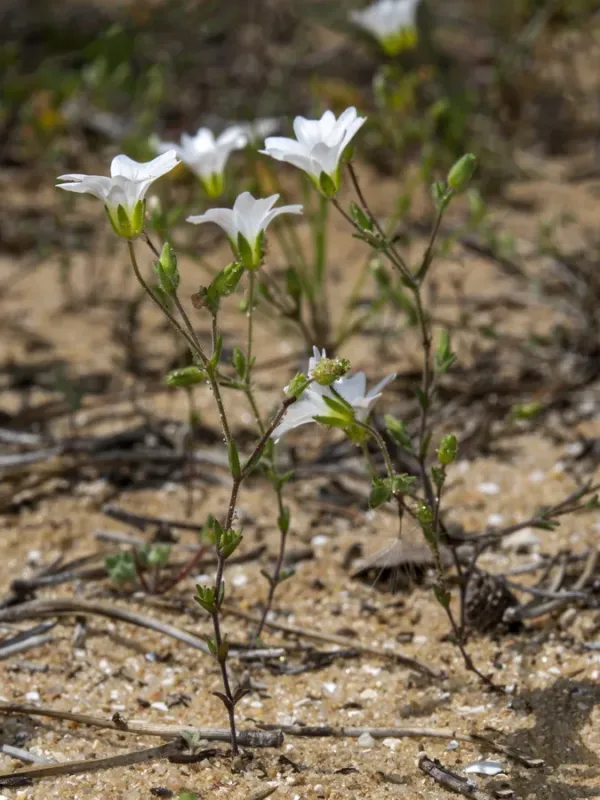
Description
Growing requirements
Arenaria algarbiensis is a perennial herbaceous plant belonging to the Caryophyllaceae family. This species is an endemic plant with an extremely restricted distribution, native specifically to the Algarve region in southern Portugal.
The plant thrives in specific ecological niches, typically found in sandy or rocky soils within Mediterranean climate zones. A critical requirement for this species is a well-drained substrate, as it is highly susceptible to root decay when exposed to waterlogged conditions.
Arenaria algarbiensis requires high levels of solar radiation to maintain its compact growth habit and overall health. It is biologically adapted to nutrient-poor soils, common in coastal or arid rocky environments, making it a specialized species rather than a conventional crop.
Botanical features include the formation of dense mats, which serve as a protective mechanism against moisture loss and harsh wind exposure in its natural habitat. The flowering phase typically occurs during the spring and summer, facilitating the reproductive cycle under optimal thermal conditions.
While the plant does not serve a traditional agricultural role, it holds significant value for biodiversity conservation and botanical research. Any attempt to cultivate this species requires mimicking its native edaphic conditions to ensure long-term viability and successful development.