
Arctic polargrass
Arctagrostis latifolia (R. Br.) Griseb.
Description
Sowing dates
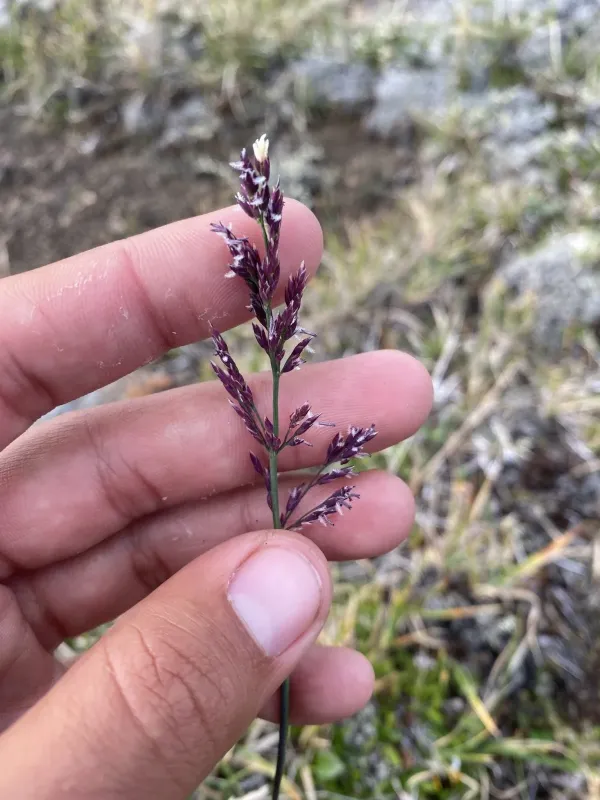
Arctic polargrass (Arctagrostis latifolia) is a perennial rhizomatous grass belonging to the Poaceae family. The plant is known for its remarkable ecological plasticity, making it a valuable candidate for agriculture in extreme Northern latitudes.
In subarctic and Arctic regions, sowing is typically scheduled for late May or early June, coinciding with the period of soil thawing. The seeds have a prolonged germination process, requiring well-prepared seedbeds.
Sowing is performed in rows with spacing of 15–20 cm. Due to the small seed size, the depth should not exceed 1–2 cm, followed by rolling to ensure good soil-to-seed contact for proper establishment.
This crop exhibits slow growth during its first year, focusing on vegetative biomass. It reaches its full potential and demonstrates intense tillering starting from the second or third year post-seeding.
In its natural habitat, propagation occurs through both seeds and a robust system of rhizomes, allowing the grass to colonize vacant areas rapidly and create a dense, stable sod layer.
Growing requirements
Arctic polargrass is a classic representative of Arctic and subarctic flora, possessing unique frost resistance and the ability to survive soil freezing at significant depths.
The plant thrives in moist environments and is commonly found along riverbanks, in damp meadows, and in tundra depressions where there is a consistent influx of nutrients from snowmelt.
It is relatively tolerant of soil conditions, though it performs best on loamy and peaty-gley soils with a slightly acidic or neutral pH level.
Temperature is the primary limiting factor for development. Arctic polargrass grows actively at low positive temperatures, allowing it to outperform many other meadow grasses in the early season.
Agronomic practices require the application of mineral fertilizers, particularly nitrogen, during early growth stages, as mineralization processes are extremely slow in tundra environments.
Yield
The agricultural use of Arctic polargrass is concentrated in Northern livestock farming, where it is valued as high-quality forage for reindeer and cattle, noted for its excellent palatability.
Green biomass yield varies depending on moisture availability and soil fertility. Under optimal conditions, cultivated stands can provide between 1.5 to 2.5 tons of hay per hectare.
The nutritional profile of this grass is impressive, containing significant levels of protein and sugars that remain preserved even after the first autumn frosts, which is critical for late-season grazing.
The regrowth capacity is moderate; however, with sufficient moisture, the plants are able to regenerate after mowing, providing enough vegetative growth for multiple uses throughout the season.
When used in grass mixtures, Arctic polargrass demonstrates great resistance to trampling, making it an ideal choice for the restoration of pastures in intensive reindeer herding areas.
Main diseases and pests
Major diseases include fungal infections like leaf rust and various smuts, which tend to proliferate in years with higher-than-average summer rainfall.
Pests specific to cereal crops, such as grass flies and certain aphid species, can damage the reproductive organs, thereby reducing seed production potential during breeding programs.
To prevent the spread of pathogens, it is recommended to implement crop rotation and use locally adapted varieties that show natural resistance to indigenous fungal strains.
High humidity during the flowering period can lead to the development of mold on the seed heads, significantly compromising seed quality and reducing germination rates for the following season.
Agronomic control methods focus on timely mowing and, in rare instances, the application of fungicides, although chemical treatments are rarely used in the industrial scale of Arctic farming.
Harvesting
Harvesting for hay should occur during the full heading stage when the nutrient content in leaves and stems reaches its peak before lignification begins.
Mowing is best performed in the morning after the dew has evaporated, which helps achieve optimal moisture levels for drying the biomass in windrows.
For seed harvesting, crops should be gathered when the upper part of the panicles begins to turn brown, taking care to avoid over-ripening, as the seeds are prone to shattering during strong winds.
After mowing, the seed material is dried under field conditions until moisture content drops to 14%, followed by threshing using equipment calibrated for small-seeded crops.
Stored hay must be protected from precipitation, as the crop is hygroscopic and can lose its nutritional value rapidly if exposed to moisture, which promotes mold growth.