
Bangalow palm
Archontophoenix cunninghamiana
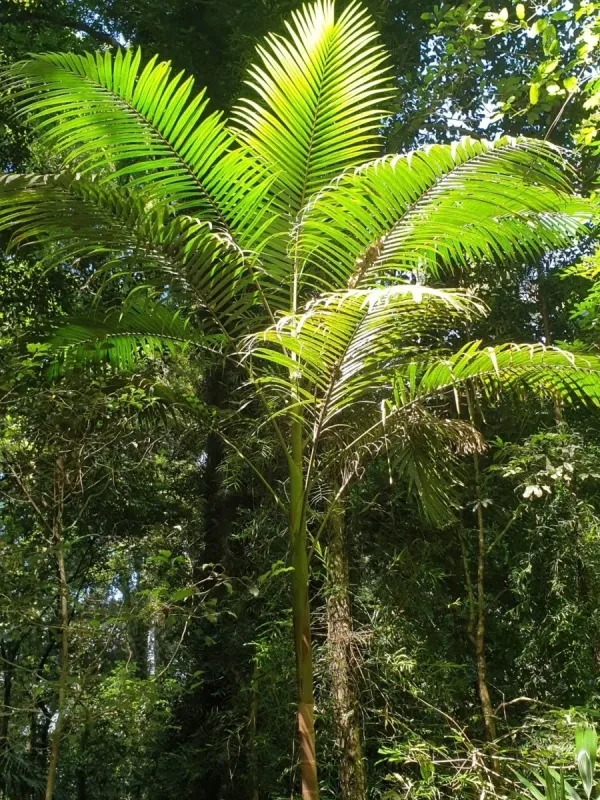
Description
Sowing dates
Propagation of this culture is primarily carried out by seeds. Freshly harvested seeds should be sown in a well-drained substrate immediately after ripening, as they quickly lose their viability.
For successful germination, it is necessary to maintain a stable soil temperature between 25 and 30 degrees Celsius. The germination process can take from one to three months depending on conditions.
The seeding containers must be deep enough to provide space for the development of the palm's primary taproot. Once the first true leaves appear, the seedlings should be pricked out into individual pots.
Young plants require protection from direct sunlight, so they should be kept in semi-shaded conditions during the early stages. In greenhouse environments, sowing can be done year-round.
It is important to ensure soil sterility to prevent the development of mold fungi, which can be fatal to the seedlings of this exotic culture.
Growing requirements
Archontophoenix cunninghamiana belongs to the Arecaceae family and is native to the rainforests of Australia's east coast. The culture prefers a tropical or subtropical climate with high air humidity.
The plant has high requirements for soil: it must be fertile, rich in organic matter, and possess excellent drainage. The preferred soil pH is slightly acidic to neutral.
During the active growing season, the palm requires abundant watering, but waterlogging in the root zone is unacceptable. Watering should be significantly reduced during the winter period.
The culture is light-loving, but in its juvenile stage, it easily tolerates light shading, mimicking its natural habitat under the forest canopy. Adult specimens thrive in bright, indirect light.
To promote active growth, the plant needs regular fertilization with complex fertilizers containing high levels of micronutrients, especially nitrogen, potassium, and magnesium.
Yield
The economic use of Archontophoenix cunninghamiana is focused on landscape design and ornamental horticulture. This palm is highly valued as a solitary specimen in park compositions.
In southern regions, the plant is widely cultivated in open ground for creating alley plantings and urban green spaces. High ornamental value makes it popular among commercial nurseries.
The productivity of this culture in nurseries is assessed by the number of marketable saplings ready for transplantation into open ground once they reach a certain stem height.
Due to its relatively fast growth rate under favorable conditions, the palm allows for the creation of vertical accents in the landscaping of commercial properties in a short time.
The culture is also successfully grown as a container plant for decorating winter gardens, atriums, and spacious office lobbies in countries with moderate climates.
Main diseases and pests
The primary pests affecting this palm are mealybugs and scale insects, which suck sap from the young foliage. Systemic insecticides are recommended for their control.
Spider mites can pose a threat when the plant is kept in the dry air of heated indoor spaces. Regular misting of the canopy helps to minimize these risks.
Fungal diseases, such as leaf spots or root rots, occur most frequently due to overwatering of the soil and poor air circulation within the canopy area.
Deficiencies in specific micronutrients, especially magnesium, lead to leaf chlorosis, which noticeably reduces the aesthetic value and overall vitality of the plant.
It is important to perform regular sanitary pruning of dead leaves, as they can become a breeding ground for pathogenic organisms.