
Aptosimum albomarginatum
Aptosimum albomarginatum
Description
Growing requirements
Aptosimum albomarginatum is a perennial dwarf shrub belonging to the Scrophulariaceae family. It is a native plant species primarily found in the arid and semi-arid regions of Southern Africa, where it has evolved to thrive in harsh environments.
The plant exhibits a remarkable adaptation to drought, featuring a deep-reaching taproot system and dense growth patterns that protect the inner tissues from excessive evaporation. It typically populates sandy or stony soils, which provide the excellent drainage the plant requires to avoid root rot.
For successful cultivation, this species demands high intensity of solar radiation and warm temperatures. It does not tolerate high humidity or waterlogged soil conditions, as its physiological processes are strictly adapted to arid environments with limited moisture availability.
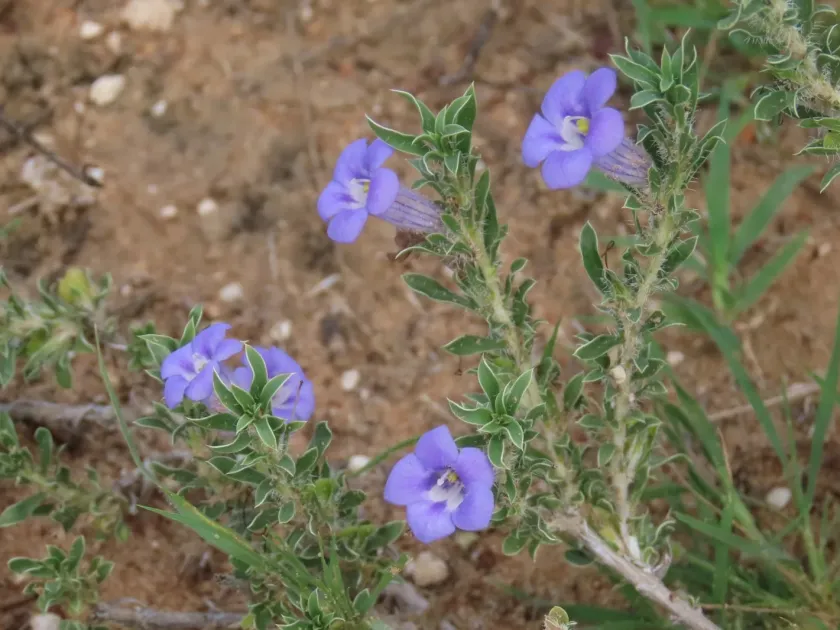
Botanically, it is characterized by its cushion-like growth, small leaves edged with distinctive white margins, and tubular, vibrant purple to blue flowers. These features not only define its appearance but also facilitate water retention and thermal regulation during peak heat.
In terms of agricultural management, the plant requires very low input. It is adapted to nutrient-poor soils, so fertilization should be kept to a minimum to avoid chemical stress. The primary focus for growers should be replicating its natural drainage and light conditions.
Main diseases and pests
The primary threats to Aptosimum albomarginatum involve root pathogens caused by overwatering or inadequate soil aeration. While the plant is inherently tough, excessive moisture creates an environment where soil-borne fungi can proliferate and damage the root system.
Pests are generally not a major concern for this species, though spider mites may occur if the plant is grown in overly humid greenhouse conditions with poor ventilation. Regular monitoring is essential to ensure the health of the foliage, especially in sensitive juvenile stages.
The plant's natural chemical defense mechanisms make it less susceptible to traditional agricultural pests. However, physical damage to the root system during handling or repotting can lead to secondary infections, requiring the use of protective fungicides if necessary.
To prevent potential losses, growers should prioritize keeping the crown of the plant dry. If fungal issues are detected, improving air circulation and adjusting the irrigation schedule to include long dry cycles usually proves more effective than chemical treatments.
Successful long-term management of this species relies on recognizing its desert origin. By maintaining dry, well-draining conditions and providing sufficient light, the plant remains highly resilient against common threats and maintains its distinct white-margin appearance.