
Desert Globemallow
Sphaeralcea ambigua A. Gray
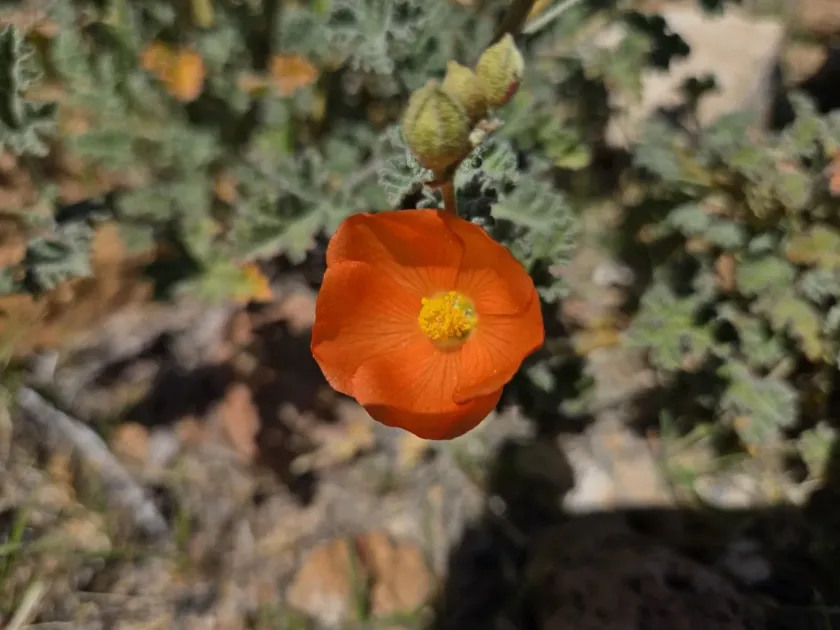
Description
Sowing dates
Desert globemallow is typically propagated by seeds, which should be started in a greenhouse setting during late winter or early spring.
To ensure uniform germination, seeds often require scarification to break their hard, protective coat before being sown in a light, well-draining substrate.
Once the risk of frost has passed, the seedlings are hardened off and transplanted into their permanent outdoor locations with full sun exposure.
Spacing is essential for this species to allow for adequate airflow around the foliage, preventing common fungal issues associated with dampness.
Direct seeding in the garden is only successful in regions where the soil remains warm and the climate mimics the plant's native arid habitats.
Growing requirements
As a member of the Malvaceae family, Sphaeralcea ambigua is uniquely adapted to thrive in harsh desert and semi-arid environments.
This species demands full sun to reach its full potential, as low light levels will result in leggy stems and poor flower production.
The ideal soil is sandy, rocky, or gravelly; heavy clay soils must be amended extensively to ensure the rapid drainage that this plant requires.
It is remarkably tolerant of extreme heat and prolonged drought, making it an excellent choice for xeriscaping and low-maintenance landscapes.
Watering should be very restricted once the plants are established, as they rely on their deep root systems to access moisture stored in the soil.
Main diseases and pests
The most common threat to this plant is root rot, which occurs when the plant is kept in overly moist or poorly drained soil conditions.
Powdery mildew can become an issue during cooler, humid periods, manifesting as a white coating on the leaves and stems of the plant.
Pests such as spider mites may infest the plant during the hottest months, particularly if the plants are stressed by extreme dry conditions.
Aphids can occasionally colonize the soft, new growth of the flower spikes, necessitating monitoring during the active growth phase.
Cultural control through proper placement and irrigation management remains the primary method for maintaining healthy, disease-free plants.