
Apocopis wrightii
Apocopis wrightii
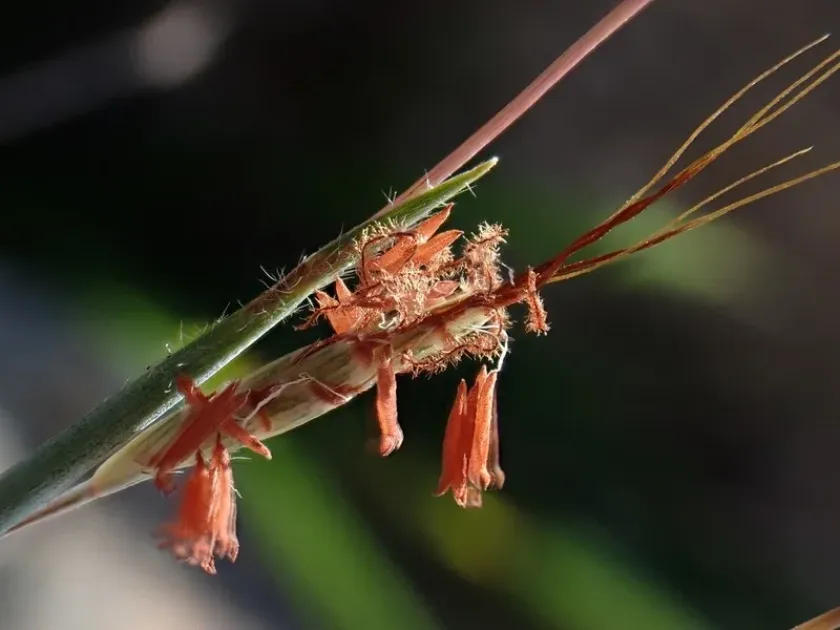
Description
Sowing dates
Apocopis wrightii is a perennial grass species that plays a significant role in the tropical grassland ecosystems of Southeast Asia.
Propagation is typically achieved through seeds, which require specific moisture conditions to ensure successful germination in the field.
Sowing should ideally coincide with the onset of the monsoon season to provide the necessary water for seedling establishment and initial growth.
Land preparation involves clearing existing debris and ensuring the soil surface is receptive to the light seeds of this grass variety.
Once established, the grass forms dense mats, which is useful for soil stabilization as well as for providing a steady source of forage.
Growing requirements
As a member of the Poaceae family, Apocopis wrightii is well-adapted to high-light environments and thrives in tropical climates.
The plant requires full sun exposure and is generally sensitive to heavy shade, which can drastically reduce its biomass production.
Regarding soil preferences, it favors loamy, well-drained soils that hold sufficient moisture without becoming waterlogged for extended periods.
It displays remarkable resilience to temporary drought, making it a robust option for agricultural zones where rainfall patterns are inconsistent.
Soil nutrient levels should be monitored, as the plant responds positively to nitrogen fertilization, which improves the crude protein content of the grass.
Yield
The biomass yield of Apocopis wrightii is highly dependent on effective pasture management and the frequency of grazing or cutting.
When managed correctly, the grass provides excellent forage for livestock, particularly cattle and water buffaloes in Southeast Asian settings.
The nutritional value is highest during the vegetative stage, emphasizing the importance of timely harvesting before the grass matures into a fibrous state.
Regrowth capacity is a key feature of this species, allowing for multiple cuttings per season under optimal management conditions.
High yields are sustained by maintaining moderate stocking rates or rotational grazing systems that allow for periodic rest periods.
Main diseases and pests
The primary threats to this crop include various fungal diseases that thrive in high-humidity tropical conditions, leading to leaf spot symptoms.
Insect pests, such as grasshoppers and other orthopterans, can cause significant defoliation, reducing the overall photosynthetic area of the plant.
Crop health can be maintained by practicing rotational harvesting and avoiding the accumulation of old plant biomass that harbors pathogens.
Drainage management remains the best defense against root-related issues that occur when soil saturation persists for too long.
Integrated pest management strategies are recommended to keep damage levels within economically acceptable thresholds in large-scale plantations.
Harvesting
Harvesting for hay should be timed carefully, ideally just before the emergence of the inflorescence to ensure the best leaf-to-stem ratio.
For efficient harvesting, machinery should be adjusted to leave a sufficient stubble height, which is critical for the plant's subsequent regrowth.
After cutting, the biomass should be dried thoroughly in the sun to minimize the risk of mold formation during storage in bales.
If harvested for seed, the inflorescences must be collected when they reach physiological maturity, indicated by a slight color change to straw-yellow.
Post-harvest management should include adequate fertilization to replenish soil nutrients and prepare the stand for the next vegetation cycle.