
Aphandra natalia
Aphandra natalia
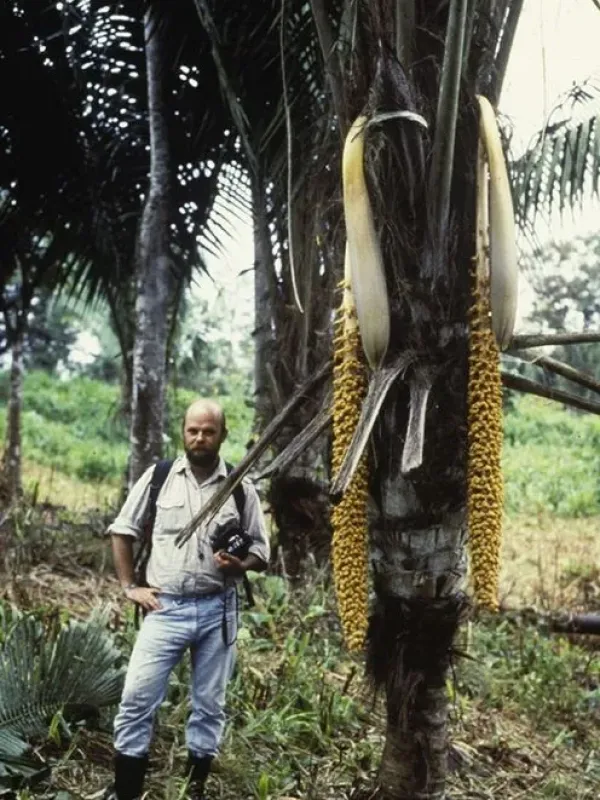
Description
Sowing dates
Propagation of Aphandra natalia in its native habitat relies on natural seed dispersal. Seeds fall to the moist forest floor, where the combination of consistent heat and humidity triggers germination cycles.
In a controlled cultivation setting, it is essential to use fresh seeds, as their viability decreases rapidly after harvest. A well-draining, sterile, and organic-rich medium is recommended to prevent seedling rot.
Maintaining a temperature range of 28-30 degrees Celsius is critical for optimal germination success. Using a heating mat and a propagation dome can help sustain these required thermal and moisture conditions.
Growth of the seedlings is characterized by a slow initial phase. During this time, the soil should be kept uniformly moist but not waterlogged, as the roots are highly susceptible to anaerobic conditions.
Once the seedlings develop multiple leaves, they can be gradually acclimated to ambient conditions. Careful handling is required during repotting, as the root systems of juvenile palms are sensitive to disturbance.
Growing requirements
Aphandra natalia is a member of the Arecaceae family, indigenous to the tropical regions of Ecuador and Peru. It thrives in the understory of primary rainforests, where it is shielded from extreme light.
The species requires a climate with year-round high temperatures and high humidity levels. It has no frost tolerance and will suffer severe damage if exposed to cold drafts or sub-tropical temperatures.
Soil requirements focus on high organic content and excellent drainage capacity. While the plant loves water, stagnant conditions in the root zone must be avoided at all costs to ensure long-term plant health.
Atmospheric humidity is perhaps the most important environmental factor. In areas where natural humidity is low, regular misting or the use of automated humidification systems is necessary to prevent foliage desiccation.
The plant performs best under dappled light conditions. In cultivation, 50-70 percent shade cloth is often used to replicate the filtered light of the rainforest canopy, protecting the leaves from solar scorching.
Main diseases and pests
Like many tropical palms, Aphandra natalia can be susceptible to various fungal pathogens when kept in conditions with poor air circulation or excessive moisture stagnation.
Common pests include spider mites and mealybugs, which tend to congregate in the protected areas between the petioles. Regular inspection and maintaining good hygiene around the plant base are essential preventative measures.
In some regions, specific species of beetles can cause damage by boring into the trunk or feeding on the tender apical meristem. Early detection is key to managing these infestations before they become systemic.
Nutrient deficiencies can also manifest as leaf chlorosis if the soil pH is not within the optimal range or if essential micronutrients are lacking. Regular soil analysis is recommended for healthy growth.
Biotic stressors are often exacerbated by abiotic factors. Therefore, providing optimal light, water, and air circulation remains the primary defense against the majority of diseases and pest incursions.
Harvesting
The harvest of Aphandra natalia centers on the fruits, which are a valuable resource for local communities. The fruits are gathered manually once they have reached peak maturity.
Care is taken during the harvest to ensure the stability of the mother plant. Collectors avoid damaging the trunk or the growing point, which would compromise the future productivity of the palm.
Post-harvest handling involves the immediate removal of fibrous husks to access the inner pulp and seeds. In humid tropical climates, rapid processing is necessary to prevent microbial fermentation of the produce.
The extracted pulp is used as a food source, while the oil content in the fruit is highly valued for various traditional culinary and artisanal applications.
Seeds separated during the harvest can be processed for propagation or utilized as artisanal materials, highlighting the multi-purpose utility of this specific tropical palm.