
Anogeissus acuminata
Anogeissus acuminata
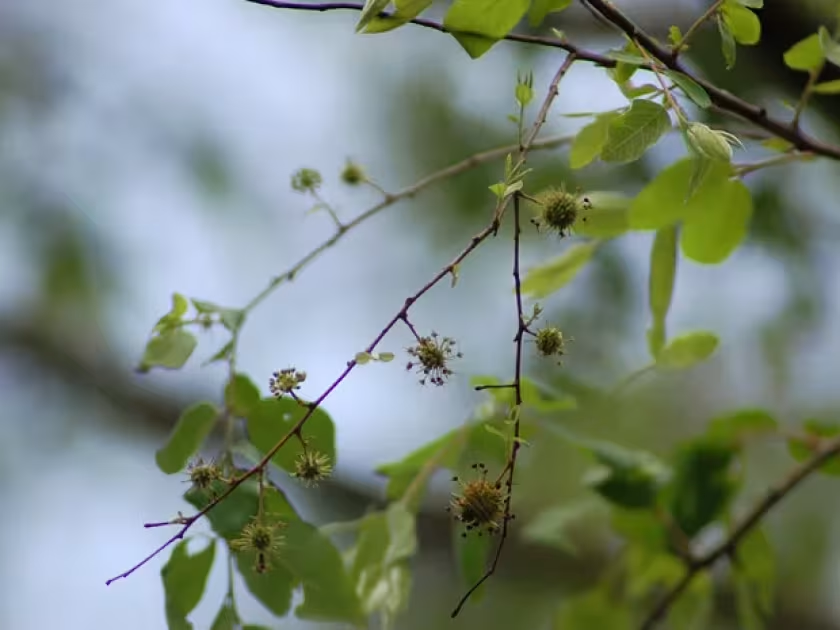
Description
Growing requirements
Anogeissus acuminata is a robust deciduous tree species belonging to the Combretaceae family. It is known for its structural strength and high-quality timber properties.
The native range of this species covers Southeast Asia, primarily encompassing countries like India, Myanmar, and Thailand. It thrives in tropical monsoon climates.
This crop prefers alluvial soils located near water bodies. It exhibits a remarkable ability to survive in periodically flooded areas, making it ideal for riverside reforestation.
Optimal growth requires full sun exposure. As a pioneer-like species, it does not perform well under dense canopy cover, needing open space to develop a straight bole.
The wood of Anogeissus acuminata is highly prized in industry. It is commonly used for heavy-duty construction, agricultural tools, and high-quality charcoal production.
Main diseases and pests
Plantations are often susceptible to stem borers and wood-boring beetles. These insects can compromise the structural integrity of the wood if the trees are stressed.
Fungal infections, often manifesting as heart rot, can occur in older trees, particularly if there are open wounds or scars on the trunk that allow moisture entry.
Defoliating caterpillars represent a potential threat to young seedlings. Intensive management during the early establishment phase is necessary to prevent significant damage.
Weed competition is a significant factor in forest management. Lianas and invasive climbers can strangle young trees, necessitating regular mechanical clearing.
Environmental stress, such as prolonged droughts or extreme flooding, can lower the tree's natural resistance, making it more prone to secondary attacks by pests.