
Sydney red gum
Angophora costata (Gaertn.) Britten
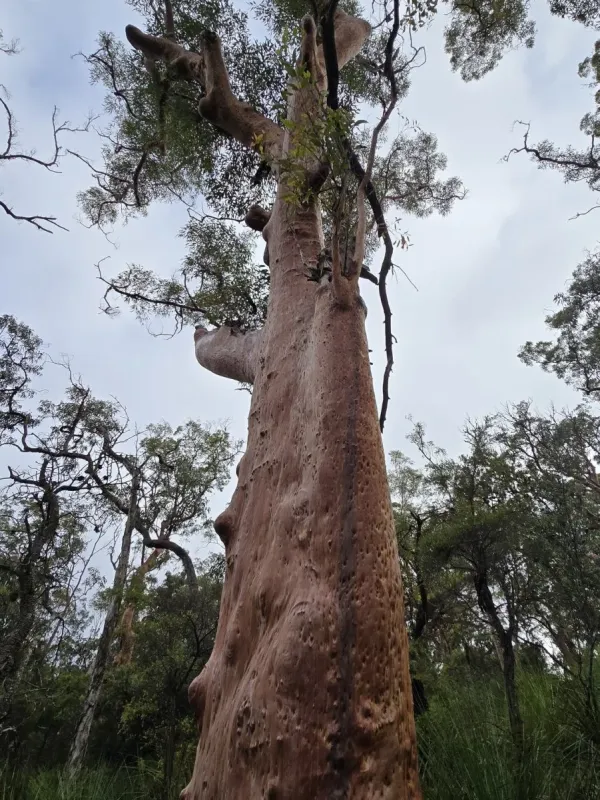
Description
Sowing dates
Propagation of the Sydney red gum is primarily achieved through seeds. Sowing should be carried out in spring using a well-draining substrate, maintaining a stable temperature around 20–22 degrees Celsius.
Seeds require pre-treatment or soaking to improve germination rates. It is essential to use containers with high-quality drainage, as young seedlings are extremely sensitive to moisture stagnation.
In natural habitats, germination is triggered by environmental factors such as fire or heavy rainfall; therefore, cultivation must simulate these conditions for successful results.
Transplanting seedlings to their final location is performed once the root system is well-established and the risk of frost has passed.
Spacing between individual trees should be at least 3 to 5 meters to provide sufficient room for the canopy to develop into its characteristic shape.
Growing requirements
Angophora costata belongs to the Myrtaceae family and is native to the coastal regions of eastern Australia. It thrives in sandy, nutrient-poor soils typically found on sandstone cliffs.
The plant requires significant amounts of direct sunlight and does not tolerate shade well. An ideal climate is subtropical, characterized by mild winters without extreme temperature drops.
Soil pH should range from slightly acidic to neutral. Good aeration is a fundamental requirement to prevent root rot caused by stagnant groundwater.
While mature trees are highly drought-tolerant, young plants need consistent watering until they become fully established in the ground.
Due to limited frost tolerance, cultivation in temperate regions is restricted to greenhouses or conservatories to protect the plant from freezing temperatures.
Yield
In a strict agricultural sense, the Sydney red gum is not a food crop; however, it holds significant value in forestry, soil conservation, and ornamental horticulture.
Its timber is remarkably dense and durable, though harvesting is strictly limited due to the tree's slow growth rate and its ecological importance in its native habitat.
The main product for plant nurseries is viable seed, harvested from woody capsules for propagation and the expansion of botanical collections.
In professional nursery settings, the output of healthy saplings depends on maintaining precise moisture control and temperature regulation during the initial growth phase.
Growth rates generally range from 30 to 60 centimeters per year under optimal conditions of light, temperature, and proper soil maintenance.
Main diseases and pests
Angophora costata is susceptible to several fungal diseases, particularly when overwatered, which can lead to severe root decay and eventual tree decline.
Typical pests include various leaf-eating insects and caterpillars that can damage foliage, especially on young saplings, impacting their overall vigor.
Sooty mold can develop on leaves in high-humidity environments, often associated with the presence of sap-sucking insects that excrete honeydew.
Effective management involves ensuring good air circulation around the crown and regular inspections to identify infestations at an early stage.
- Sanitary pruning of dead or diseased branches.
- Monitoring soil moisture levels to avoid waterlogging.
- Integrated pest management using environmentally safe treatments.