
Androsace vitaliana
Androsace vitaliana
Description
Growing requirements
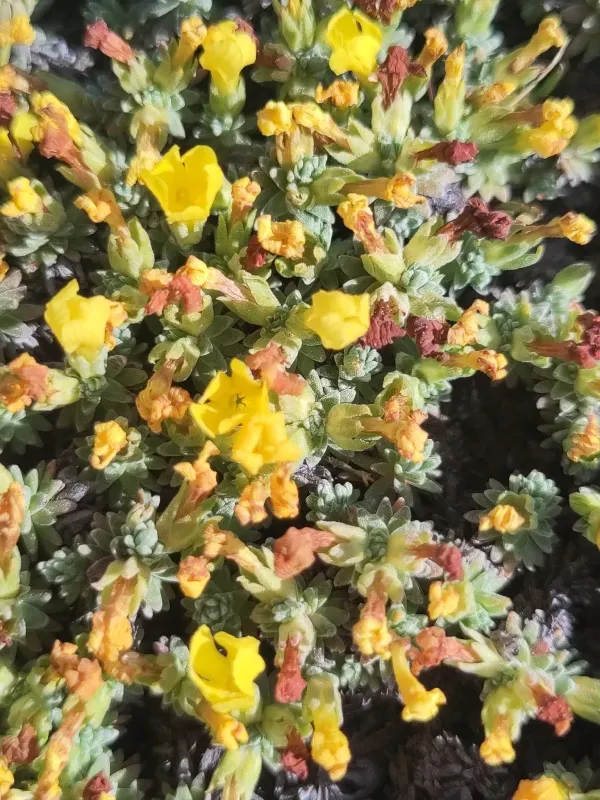
Androsace vitaliana is a perennial herbaceous plant belonging to the Primulaceae family. Native to the mountainous regions of Europe, specifically the Alps and Pyrenees, it thrives in rocky habitats and alpine meadows at high altitudes where environmental conditions are harsh.
The plant is characterized by its cushion-forming growth habit, creating dense mats of small, linear leaves. During its blooming season, it produces vibrant, bright yellow flowers that rise slightly above the foliage, creating a striking visual impact for collectors of alpine flora.
Successful cultivation requires soil that is extremely well-draining, typically a mix of grit, gravel, and lean compost. This species is highly susceptible to root rot if water lingers around the crown, making soil composition the most vital aspect of its agricultural management.
It demands full sun exposure to maintain its compact, cushion-like structure. In cultivation, it is widely utilized for rock gardens, trough plantings, and alpine houses, where its miniature stature and resilience to cold make it an excellent choice for ornamental gardening.
Regarding its maintenance, the plant requires very little additional fertilization, as it is adapted to nutrient-poor soils. Over-fertilizing or providing too much organic matter can lead to excessive, soft growth, which makes the plant more vulnerable to environmental stress.
Main diseases and pests
The primary threats to this species involve moisture-related issues. Root rot and damping-off, driven by poor drainage or stagnant air, are common causes of decline. It is essential to ensure that the immediate area around the crown stays dry, often achieved by applying a layer of coarse grit.
Pest problems are relatively minimal but can include slugs and snails, which may damage the foliage in humid, damp weather. Occasionally, aphids can infest the flower stems, requiring careful monitoring and mild, targeted pest control measures.