
Swiss rock jasmine
Androsace helvetica
Description
Growing requirements
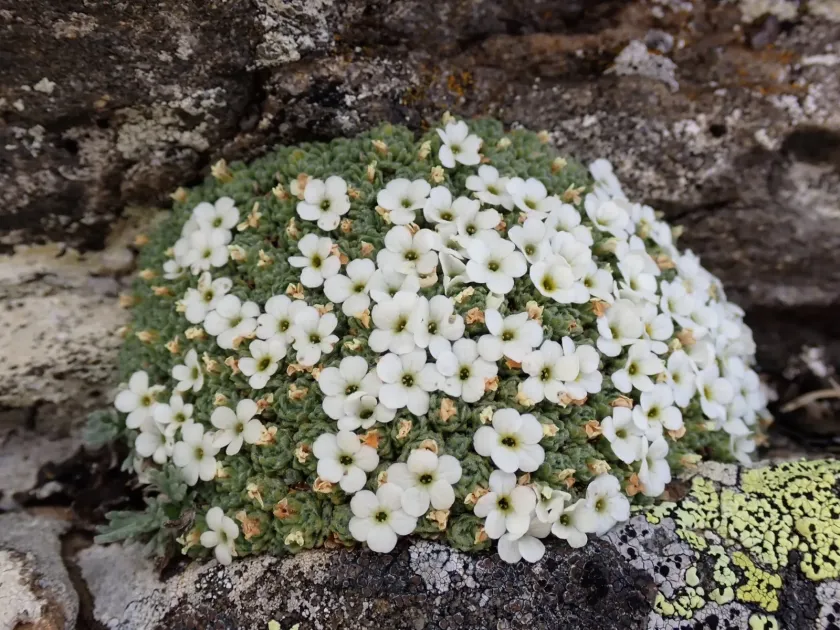
Swiss rock jasmine (Androsace helvetica) is a perennial herb belonging to the Primulaceae family. It is a highly specialized alpine plant native to the high-altitude rocky cliffs of the European Alps, known for its extreme resilience to cold.
The plant grows in characteristic compact, dense, moss-like cushions composed of tiny imbricated leaves. These cushions are covered in white, fine hairs, giving the plant a distinctive silvery-grey appearance throughout the growing season.
Successful cultivation requires mimicry of its natural habitat. The plant demands a perfectly drained mineral substrate, typically composed of grit, limestone chips, and a minimal amount of humus. Soil moisture must be kept low to prevent root decay.
It thrives in full sunlight but requires cool air circulation, making it a challenging species for gardens in hot, humid lowland areas. It is widely regarded as a trophy plant among alpine enthusiasts for its slow growth and meticulous beauty.
In terms of garden use, it is primarily intended for specialized rock gardens, alpine troughs, or cold frames where the gardener can precisely manage the moisture and soil composition. It does not perform well in standard garden borders or competitive planting schemes.
Main diseases and pests
The primary threat to Swiss rock jasmine is crown rot, a fungal condition triggered by high humidity and poor drainage. Once moisture accumulates in the center of the cushion, the tissue quickly decays, leading to the collapse of the plant.
Slugs and snails are the most significant vertebrate pests, as they feed on the delicate rosettes, often leaving unsightly gaps in the cushion. Physical barriers or organic deterrents are recommended for high-risk areas.
In greenhouses or under glass, aphids and spider mites can occasionally affect the plant, particularly if the air is too dry and stagnant. Maintaining optimal airflow is essential to prevent these infestations from spreading.
Winter desiccation and freeze-thaw cycles can cause damage to the foliage. Protecting the cushion from winter rain and melting snow with a piece of glass or a cloche is a common practice among professional rock gardeners.
Competition from more aggressive, faster-growing species is a major threat in an uncontrolled garden setting. The plant is not robust enough to fend for itself and requires a clean, weed-free environment to thrive over the long term.