
Cylindrical Rock Jasmine
Androsace cylindrica
Description
Growing requirements
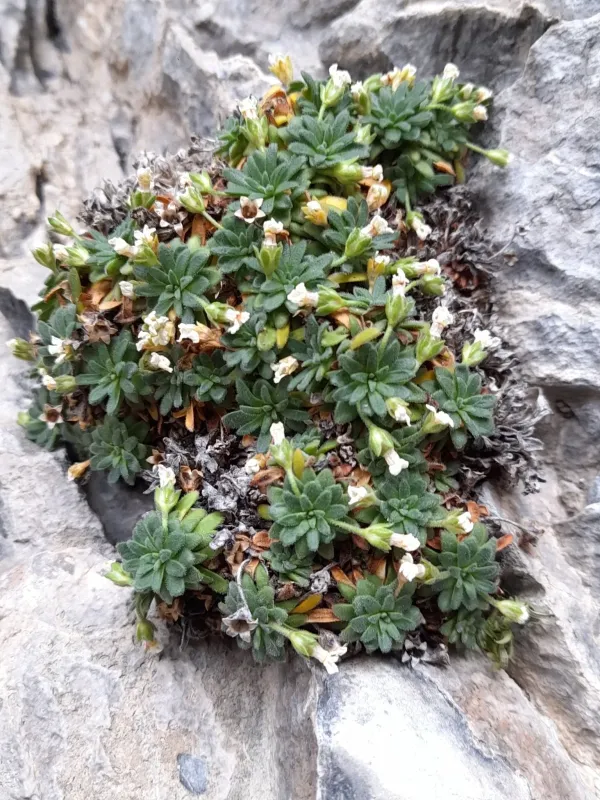
The Cylindrical Rock Jasmine (Androsace cylindrica) is a small perennial herbaceous plant belonging to the Primulaceae family. Native to the limestone crevices of the Pyrenees, this species has evolved into a compact, slow-growing cushion-forming plant that is highly sought after by alpine garden enthusiasts.
Botanically, the plant is characterized by its distinctively cylindrical leaf rosettes that form tight, hard mats. This growth habit allows it to survive in harsh, windswept mountain environments, making it a masterpiece for specialized rock gardens and troughs where drainage is exceptional.
Cultivation requirements for this species are strict: it thrives in a well-drained, gritty, lime-based substrate. It is essential to ensure that the soil remains lean and mineral-rich, as nutrient-dense organic soils will lead to unnatural, weak growth and make the plant susceptible to environmental stress.
Climate needs include cool, airy conditions with plenty of sunlight. While the plant is hardy, it requires protection from excessive moisture and extreme summer heat. Providing a vertical planting position, such as in a crevice garden, mimics its natural cliff-side habitat and significantly improves success rates.
Agrotechnical care focuses primarily on moisture management. During the growing season, watering should be meticulous, targeting the root zone rather than the foliage. During the dormant winter phase, keeping the plant dry is paramount to prevent the crown from rotting, which is the most common cause of failure.
Main diseases and pests
The primary threats to Androsace cylindrica are fungal diseases, particularly crown rot and gray mold (Botrytis), which are triggered by stagnant air and excess soil moisture. Ensuring good air circulation and using coarse gravel mulch around the base of the plant is vital to prevent these issues.
Insect pests such as aphids can occasionally infest the tight rosettes, drawing sap from the inner leaves. Integrated pest management using gentle systemic pesticides is recommended if an infestation occurs. Vigilance in monitoring the health of the rosettes is essential for long-term cultivation success.