
Anadendrum montanum
Anadendrum montanum
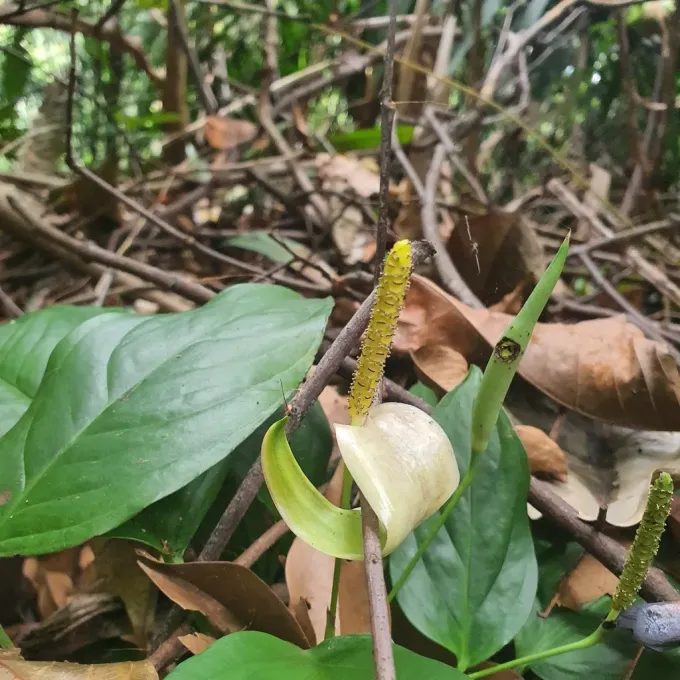
Description
Growing requirements
Anadendrum montanum is a distinctive member of the Araceae family. This evergreen tropical vine is native to the dense, humid forests of Southeast Asia, where it thrives in the shady environments of the forest floor and understory.
The plant exhibits remarkable adaptation to low-light conditions. In its natural habitat, it uses its foliage to capture limited sunlight, making it highly effective for indoor cultivation in residential or office spaces with diffused light.
For optimal health, the plant requires high relative humidity and a tropical temperature range, ideally between 22 and 28 degrees Celsius. Preventing extreme drops in temperature is crucial for the continuous development of its stems and leaves.
The growing medium must be porous and nutrient-rich. An ideal substrate consists of a mix of bark, coco peat, and perlite, which ensures proper root aeration and moisture retention, mimicking the nutrient-rich humus of the forest floor.
As a hemi-epiphyte, Anadendrum montanum needs a stable support structure to reach its full potential. The plant utilizes aerial roots to climb, which enhances its structural integrity and allows for natural vertical growth patterns.
Main diseases and pests
Common pests that may target this vine include spider mites, particularly in environments where air humidity is insufficient. Regular misting and leaf cleaning are essential preventative measures to keep these populations at bay.
Root rot remains the most significant threat, often resulting from improper watering practices or inadequate drainage. Ensuring that the substrate remains moist but not waterlogged is fundamental to maintaining a healthy root system.
Mealybugs can be problematic if they settle in the leaf axils or along the stems. If detected, localized treatment with horticultural soaps or systemic insecticides is usually effective in controlling the infestation.
Fungal leaf spot diseases may appear if the plant is kept in an environment with high humidity but poor air circulation. Proper spacing and ventilation are key strategies to mitigate the impact of airborne pathogens.
Nutritional imbalances, often caused by excessive salt buildup from fertilizers, can manifest as leaf necrosis. Flushing the soil periodically with clean water helps maintain an optimal nutrient balance for the plant's long-term health.