
Maackia amurensis
Maackia amurensis Rupr. & Maxim.
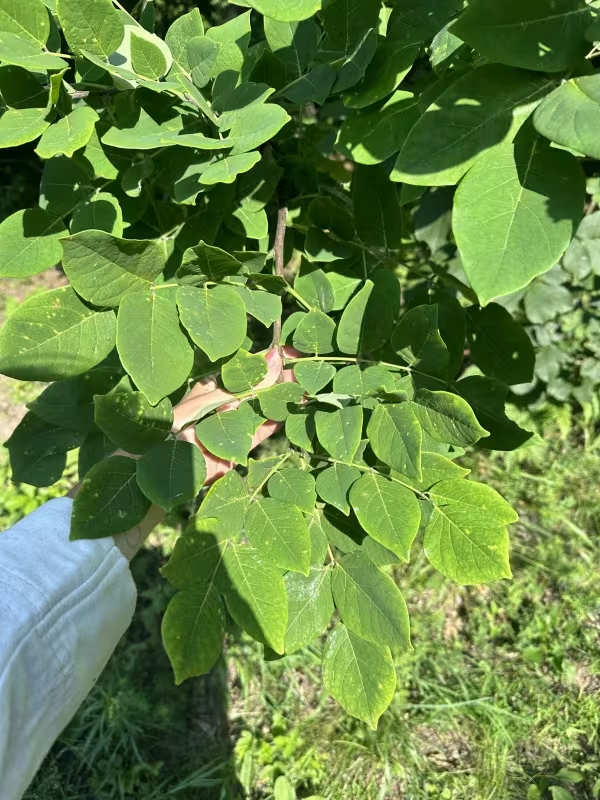
Description
Sowing dates
Propagation of Maackia amurensis is primarily achieved through seeds. Sowing is typically performed in autumn or spring, requiring a mandatory cold stratification period of 1 to 2 months at low positive temperatures to break dormancy.
Seedlings emerge relatively uniformly; however, growth is slow during the first year of life. Maintaining optimal soil moisture levels in the nursery is crucial until the root system is fully established.
When sowing in the spring, it is recommended to soak the seeds in warm water for 24 hours to accelerate germination. This practice significantly improves the germination rate and results in more uniform plant development.
The optimal seeding depth is 2-3 centimeters. Excessive depth can severely decrease germination energy, leading to sparse stands in the nursery beds.
Transplanting to a permanent location is recommended after the seedlings reach 2-3 years of age. Young trees tolerate transplanting well if the root ball is handled with proper care.
Growing requirements
Maackia amurensis, a member of the Fabaceae family, is a highly decorative tree reaching up to 15 meters in height under favorable conditions. It is native to the Russian Far East, China, and Korea.
The crop has moderate soil fertility requirements, preferring well-drained, loamy, or sandy soils. It is known for its extreme winter hardiness, allowing for successful cultivation in various temperate climates.
As a light-loving species, it requires open, well-lit areas to develop a dense, aesthetically pleasing crown. Shade exposure can significantly reduce its decorative potential and growth rate.
The plant does not have strict moisture demands, although young plantings benefit from regular irrigation during dry spells. Mature specimens are exceptionally drought-tolerant once established.
Maackia responds well to initial fertilizer applications in the first few years. As a nitrogen-fixing species, it helps improve soil structure and chemical composition through its symbiotic relationship with root bacteria.
Yield
The primary economic value of Maackia lies in its high-quality wood, which is prized for its strength, durability, and resistance to rot, making it a valuable resource for furniture manufacturing.
Maackia amurensis is widely recognized as an excellent honey plant. Its mid-summer flowering period provides a critical and reliable source of high-quality nectar for bees during the summer dearth.
A single hectare of Maackia plantings can produce a substantial amount of honey. The productivity of the nectar flow depends heavily on the planting density and the regional climatic conditions.
Wood recovered from sanitary pruning is commonly used for artisanal crafts and interior finishes. Integrating Maackia into landscaping projects adds both aesthetic appeal and long-term value to property.
The pharmaceutical industry utilizes the bark and leaves of the tree, which are known to contain bioactive compounds with antibacterial and general health-promoting properties.
Main diseases and pests
Maackia amurensis possesses strong natural resistance to many diseases common to other leguminous trees. However, high-humidity environments can occasionally lead to fungal leaf spots.
Typical pests include leaf-eating insects that may affect the crown's appearance. Regular monitoring of foliage is recommended to detect early infestations and allow for the application of biological insecticides.
Waterlogging in the root zone poses a risk for root rot development. Installing adequate drainage in the planting area is the most effective preventative measure for root health.
Young saplings can be susceptible to damage by rodents during winter. Applying protective guards or wrapping the trunk base in nurseries effectively prevents bark damage caused by wildlife.
Overall, the plant is considered low-maintenance and highly resilient, making it an excellent candidate for ecological gardens that prioritize reduced chemical inputs.