
Greybeard grass
Amphipogon strictus
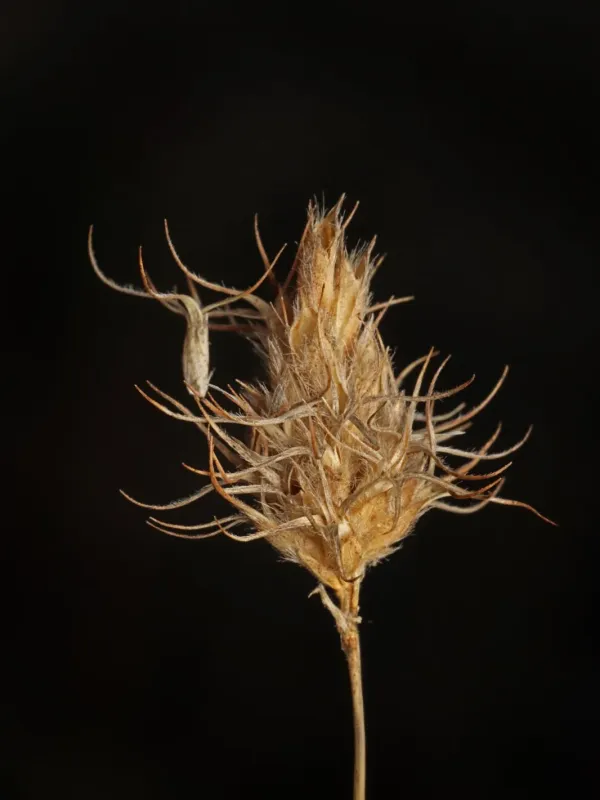
Description
Growing requirements
Greybeard grass (Amphipogon strictus) is a perennial member of the Poaceae family native to Australia. It is widely recognized for its robust nature and ability to thrive in diverse Australian landscapes, ranging from coastal woodlands to arid scrublands.
The plant exhibits significant drought-tolerant characteristics, making it highly resilient in regions with minimal rainfall. It typically grows on sandy or rocky soil types, showing an evolutionary advantage in areas where soil nutrient levels are relatively low.
Botanically, it forms compact, dense tufts with narrow, rigid, and often slightly hairy leaves. This architecture helps the plant minimize transpiration and maintain structural integrity under harsh environmental conditions, such as high solar radiation and heat.
Requirements for cultivation include well-draining soils and full exposure to sunlight. The species is highly adaptable, rarely requiring specialized fertilization or intensive irrigation, which qualifies it as a low-maintenance option for land rehabilitation projects.
Economically, Greybeard grass is primarily utilized as forage for livestock in native rangelands. Additionally, its strong root system makes it useful for soil stabilization and environmental management, particularly in arid regions prone to erosion or soil degradation.