
Amphipogon caricinus
Amphipogon caricinus
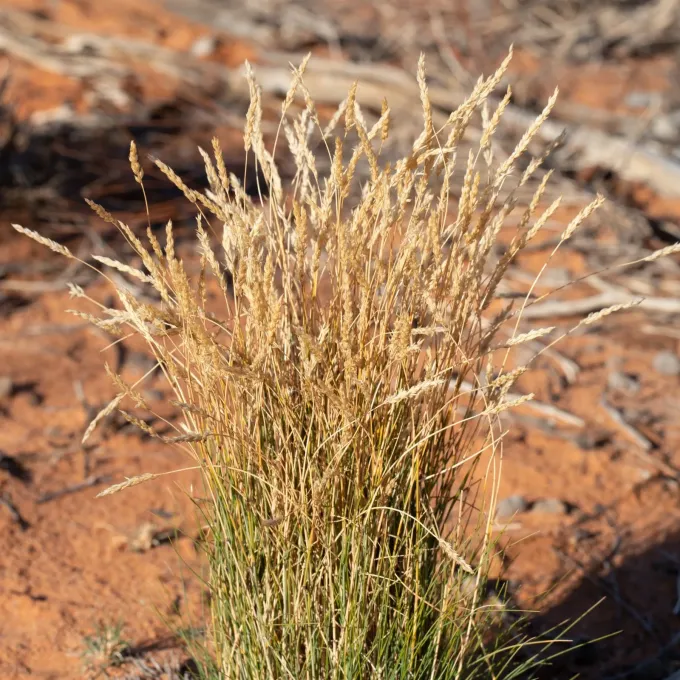
Description
Growing requirements
Amphipogon caricinus, commonly known as a type of bottle-washer grass, belongs to the Poaceae family. It is a perennial species native to Australia, specifically adapted to thrive in harsh, arid, and semi-arid environments where other vegetation often fails.
The plant exhibits remarkable tolerance for low-fertility soils, including sandy, gravelly, and rocky substrates. Its ability to persist in environments with minimal rainfall makes it a critical species for maintaining ground cover in stressed landscapes.
Botanically, it is characterized by forming dense, tufted clumps of narrow, sedge-like leaves. The inflorescence consists of compact, head-like panicles with hairy spikelets, which are a distinguishing feature of the genus and aid in seed dispersal mechanisms.
From an ecological perspective, this grass serves as an essential component in erosion control. Its robust root architecture enables it to stabilize soil profiles in regions susceptible to wind and water erosion, effectively retaining moisture within the rhizosphere.
In terms of agricultural utility, Amphipogon caricinus is primarily valued as forage for livestock in extensive pastoral systems. Although it is not a primary fodder crop, its resilience during prolonged droughts provides a reliable source of green matter when more palatable grasses are unavailable.