
Ammodendron conollyi
Ammodendron conollyi
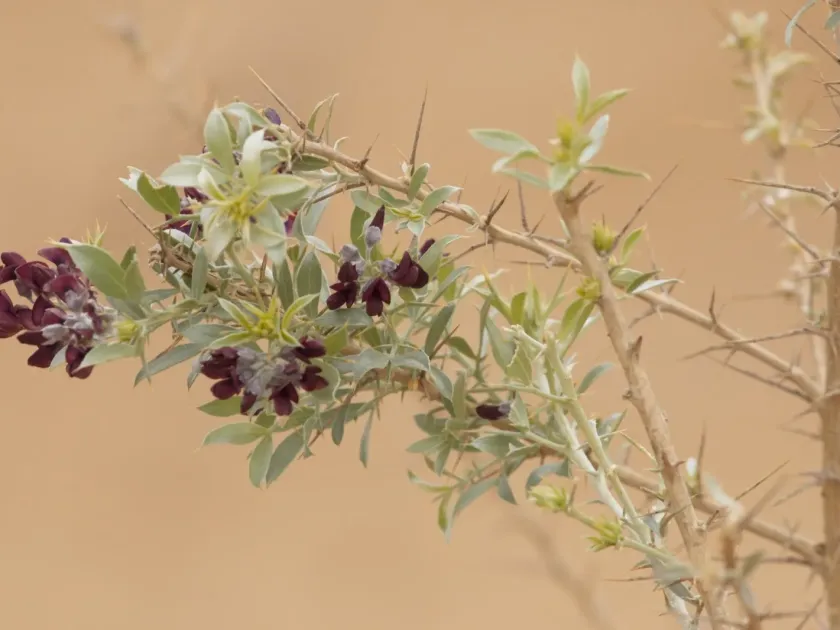
Description
Sowing dates
Sowing of Ammodendron conollyi seeds is typically carried out in early spring to take advantage of seasonal moisture and moderate temperatures.
Due to the hard, impermeable seed coat, mechanical or chemical scarification is often recommended to improve germination rates in field conditions.
Seeds should be sown at a depth of 2–4 cm, ensuring they are placed in contact with the subsurface moisture layer to support initial development.
Precision planting techniques are often employed to maintain the desired distance between individual plants, facilitating better root expansion.
Monitoring the moisture levels immediately after sowing is essential to ensure that the radical can reach deeper soil layers before the surface dries out.
Growing requirements
Ammodendron conollyi is a member of the Fabaceae family and stands as an essential biological tool for stabilizing mobile sand dunes in desert environments.
The plant thrives in sandy substrates with minimal organic matter, exhibiting a remarkable tolerance for low-nutrient, alkaline soil conditions.
It possesses an extensive root system that enables the plant to tap into deep groundwater, ensuring survival during severe multi-month droughts.
Full sun exposure is an absolute requirement for healthy growth, as the plant does not possess mechanisms to adapt to shade or competition from other flora.
Agricultural management of this species is focused on its role as a windbreak and a stabilizer in regions prone to heavy sand drifts.
Main diseases and pests
The primary pests affecting this species include various beetle species that specifically target the foliage and seeds of desert-adapted leguminous plants.
Fungal infections, such as root rot, may emerge in cases of prolonged waterlogging, although these are rare in its native arid habitats.
Rodents represent a significant threat to young seedlings, as they forage for seeds and tender stems, potentially devastating new plantation plots.
Overgrazing by local livestock is the most detrimental factor, preventing the natural regeneration of the species in restored desert areas.
Maintaining ecological balance through controlled grazing is the most effective way to protect these vulnerable and ecologically critical plantations.